Friday, April 29, 2016
On 4:13 PM by Unknown No comments
Few people seem aware of the prevalence of modern feminist efforts, many of them being confined to the internet, covered little by the media, or regionally-focused. But the few efforts that have caught on internationally still don’t seem to be recognized by the average citizen, so this will be the start of a series to remedy that.
This week we’ll cover “SlutWalks,” one of the only existing public efforts to destigmatize female sexuality and end common myths about sexual assault.
The concept of a “Slut Walk” emerged in early 2011 after a talk at a safety forum on York University’s campus. During a piece on crime prevention, a police officer chimed in to add his thoughts, noting his belief that “women should avoid dressing like sluts in order not to be victimized.” Though the officer was reprimanded and apologized after his words gained significant media coverage, two individuals, Sonya Barnett and Heather Jarvis felt that wasn’t enough. Recognizing problems both with his usage of the term “slut” and the social mores that supported his comment, they organized an event in Queens Park at the beginning of April to make a stand against similar attitudes, encouraging all participants to come without shame.Though they expected roughly 200 individuals to appear, over 3,000 showed up, some in fishnets, some in jeans and t-shirts. After a round of speeches discussing various topics related to their cause, they marched from the park to the Toronto Police Headquarters, where they briefly protested the police’s perspective on sexual assault.
After this event received significant media coverage, the movement slowly began to spread to other cities, slowly increasing momentum as they received national and international acclaim. Women turned out in London, Sydney, New Delhi, Boston, and over 250 other major metropolitan areas to support the cause, showing up in varying degrees of “slutty attire” or simple day-to-day wear. Though the initial interest in the event has died down a little, the movement is still going strong to this day; the Toronto march is now an annual event, with the group's Facebook page being consistently used as a means to expand outreach about varying consent problems.
So why is this movement so compelling for so many people? Well, for one, it’s pretty revolutionary, in the sense that it hasn’t been done before. Plenty of people have marched for equal rights and feminist causes, but few have done it nearly nude. Plenty of people have decried rape culture and victim blaming before, but rarely in march form. And while a number of scholars in recent years have restored the academic interest in women’s sexuality, those discussions rarely garner media coverage. Slut walks do garner interest though, positive or otherwise. They bring discussions of women’s rights, women’s interests, and consent into the public sphere, dragging it from the realm of academia and Cosmopolitan articles to the public square. Further, the help demolish harmful misconceptions like dress playing into the reasons for rape (most of the crimes being planned in advance by people known to the victim).
Not all of the attention they’ve gained has been positive though; some in the media question the need or efficacy of the work, while others critique the type of feminism that they’re promoting or the vitriol of the marchers. In regards to the need or efficacy or their work, this article makes a fairly comprehensive case that Slut Walks are addressing a serious issue and encouraging change in other areas. Besides cases where the attire of underage rape victims was used as proof they were “asking for it,” there is a significant body of literature that indicates that other nations still struggle with misconceptions concerning rape. Egypt, for instance, saw an upsurge of sexual assaults during the 2011 Revolution. When the UN investigated a large number of these cases, they found that over 75 percent of women assaulted were wearing conservative clothing and no makeup. Interestingly enough, over 90 percent of women in the report believed that other women encouraged sexual assault thru the way they spoke, walked, or the clothing they wore. Even if critics are right about Slut Walks being useless in the US, they at least have significant importance abroad, especially if other countries’ major cities continue to host them.
While many modern-day feminist efforts are ignored by the media, slut walks have gained a great deal of notoriety. Whether that’s due to their provocative nature or the message they promote, it means that the average individual is exposed to more perspectives on sexual assault than normal, hopefully forcing a continuous reevaluation of their beliefs. This is a significant change in how feminists engage the public in cultural conversations; hopefully we’ll see more movements like this in the future.
Friday, April 1, 2016
On 11:15 AM by Unknown No comments
As a Sustainability student who is interested in the effects of pollution upon communities, I understand that the term “environmental racism” collectively represents a vast array of grievances. That said, few seem to understand what the term actually means.
Environmental racism was first discussed in a 1971 report written by the Council of Environmental Quality. In it, the council noted a link between socio-economic status, race, and risks of exposure to pollutants, an observation quickly adopted by a plethora of social groups aiming to protest the conditions of their communities. The term’s modern definition changed little in the forty-five years since; according to Robert Bullard, director of the Environmental Justice Resource Center at Clark Atlanta University, “environmental racism refers to environmental policies, practices, or directives that differentially affect or disadvantage (whether intentionally or unintentionally) individuals, groups, or communities based on race or colour.” This could include things like storing nuclear waste in certain areas more than others, siting landfills in historically segregated communities, or allowing manufacturing plants looser restrictions on water and air pollution in monoracial areas.
The recent water quality problem in Flint, Michigan has been linked to racism for a number of reasons, including the fact that the most polluted areas in the state correspond significantly to the blackest communities. This isn’t a new trend; pollution problems have reached the point that experts can fairly accurately predict both a person’s race and how long a person has to live just by knowing their Zip Code. Similarly, nuclear testing’s repeated occurrence near the Western Shoshone nation, coal plants’ consistent siting near black populations, and Asia’s electronic waste recycling disparities, have all demonstrated structural problems with how environmental impacts are distributed. Yet while these problems are tragic, they serve to demonstrate the importance of environmental racism; without the concept, few would understand how institutional level policies directly impact health outcomes among certain demographics.
It’s important to recognize that policies that site manufacturing plants or landfills are necessary for a functioning society. It becomes problematic however when the impacts of those are unequally distributed, especially when correlated heavily with race. Though environmental racism currently poses severe threats to underprivileged communities, the recent national news coverage of Flint, Michigan brings hope that greater attention will be directed towards the problem in the near future; hopefully something of substance will finally be done to end it.
Sunday, September 20, 2015
By now I'm sure everyone has heard the tale of Ahmed Mohamed, the teenager who was put in handcuffs for bringing his homemade clock to school. This incident is a shameful example of predjudice getting out of hand, but has luckily turned out for the better for Ahmed in all the support he has found following his suspension. Since the story has spread, a lot of questions have been asked over the scenario. Did President Obama really need to get involved? Does the clock work? Does Sarah Palin really still believe that it's "more than a clock?" However, the one that I've read above any other is:
"Whould this have happebed if he was white?"
I read a pretty interesting article concerning this on The New York Post.
While I don't agree with the claim of this whole story being a "False, convient tale of racism" I do think the author's questions pose for a compelling conversation. Is the issue bias? Or is it something else?
In my opinion, it is difficult to deny that Islamophobia had a minor (if not major) role in Amed's arrest and suspension. However, I have to admit, when I first heard the story, my mind immediately went to an event that happened in my own community this past Wednesday, when a portion of the freeway was shutdown for an hour because of a cooler on the side of the road.
The New York Post article also rattles off some examples of overeactions to certain, unthreatening behavors in schools. Some students mentioned are white, some are not.
We can all agree that the reactions are extreme, we can all agree that the way they were handeled completely wrong, but what about the source of the behavior? From what illness is this a sympotom of?
When I play this out as happening at my old high school, which was predominantly white, I can very easily see a student proudly showing off his clock, and security thinking nothing of it, but at the same time, I can't rule out the possibility of the situation getting out of hand in the same way as it did for Ahmed, because I know it happenes all the time.
So, would this have happened to one of Ahmed's white classmates had they brought in a clock?
It's hard to say, but I think the greatest issue that's floated to the top of this entire ordeal is society's knee-jerk reaction to look for something to roll our eyes at, rather than allowing it to motivate us to try for something better. It always has to be dilluded by some debate. What were the administrators who called the police thinking? What was the racist-to-non-racist ratio? Who knows? Who cares?
It was another line added to the sad song of discrimination that too many minorities hear thanks to society's branding of all non-whites as violent and that's should matter.
It should have stopped before Treyvon.
It should have stopped before Tamir.
It should stopped before Ahmed.
How many more children need to fall victim before we admit that yes, racism is a problem, racism is the problem? I fear for a country that keeps asking why white kids aren't getting free white house tours instead of why black kids are getting shot.
But that's just me. Like I said before, I think this topic provides for some really, really compelling discussion, so for anybody reading this, I am personally challanging you to get out of your comfort zone and to share your opinion. What was your reaction to the story when you first heard it? What connections did you make? What do you think is the greater issue? Please, contribute below!
"Whould this have happebed if he was white?"
I read a pretty interesting article concerning this on The New York Post.
While I don't agree with the claim of this whole story being a "False, convient tale of racism" I do think the author's questions pose for a compelling conversation. Is the issue bias? Or is it something else?
In my opinion, it is difficult to deny that Islamophobia had a minor (if not major) role in Amed's arrest and suspension. However, I have to admit, when I first heard the story, my mind immediately went to an event that happened in my own community this past Wednesday, when a portion of the freeway was shutdown for an hour because of a cooler on the side of the road.
The New York Post article also rattles off some examples of overeactions to certain, unthreatening behavors in schools. Some students mentioned are white, some are not.
We can all agree that the reactions are extreme, we can all agree that the way they were handeled completely wrong, but what about the source of the behavior? From what illness is this a sympotom of?
When I play this out as happening at my old high school, which was predominantly white, I can very easily see a student proudly showing off his clock, and security thinking nothing of it, but at the same time, I can't rule out the possibility of the situation getting out of hand in the same way as it did for Ahmed, because I know it happenes all the time.
So, would this have happened to one of Ahmed's white classmates had they brought in a clock?
It's hard to say, but I think the greatest issue that's floated to the top of this entire ordeal is society's knee-jerk reaction to look for something to roll our eyes at, rather than allowing it to motivate us to try for something better. It always has to be dilluded by some debate. What were the administrators who called the police thinking? What was the racist-to-non-racist ratio? Who knows? Who cares?
It was another line added to the sad song of discrimination that too many minorities hear thanks to society's branding of all non-whites as violent and that's should matter.
It should have stopped before Treyvon.
It should have stopped before Tamir.
It should stopped before Ahmed.
How many more children need to fall victim before we admit that yes, racism is a problem, racism is the problem? I fear for a country that keeps asking why white kids aren't getting free white house tours instead of why black kids are getting shot.
But that's just me. Like I said before, I think this topic provides for some really, really compelling discussion, so for anybody reading this, I am personally challanging you to get out of your comfort zone and to share your opinion. What was your reaction to the story when you first heard it? What connections did you make? What do you think is the greater issue? Please, contribute below!
Sunday, September 13, 2015
A lot of the posts on this blog are based off of articles on other social justice websites. This week, i decided it was time for a change. I searched through my favorite websites, Psychology Today, for some insight on unconscious bias and what I found was an article that both shocked and impressed me.
Check it out here.
Dr. Mikhail Lyubansky expands on some issues outlined in a 2012 W.K Kellogg Foundation panel on "Unconscious Bias and Race." The issue is introduced with the horrifying study that revealed that Doctors actually treat patients different based on the color of their skin. They give them less pain medication, they're more reluctant to do strenuous procedures on them, and more likely to perform less desirable solutions like lower -body amputations for diabetics.
With data like this, both Lyubansky and panelists argue, it is impossible to deny that racial bias exists, and yet so few are willing to admit that unconscious bias is an issue, that racism is just a left-wing urban legend.
Psychologists argue that this bias is nothing to be ashamed of. Our brains naturally categorize everyday items into groups to make more sense of them, and the very same applies when it comes to people. But just because it's normal, doesn't mean it's okay. The longer the biases go unknown, the more harmful they can be, because the deeper they become ingrained into one's logic.
My favorite point was the following:
“There are three types of not knowing,”[John Powell, director of the Haas Center for Diversity and Inclusion and Robert D. Haas Chancellor’s Chair in Equity and Inclusion at the University of California Berkeley] explained: 1. What we can’t know, like how many neurons are firing at any given moment, 2. What we don’t care to know, like the color of the car we pass at a particular intersection, and 3. What we don’t want to know. When we talk about racism, we usually talk about #2 and #3, and those are important conversations to be having. We all need to care. We all need to want to know. But #1 is important as well."The article very prophetically describes a series of repercussions for unchecked bias that we are seeing here today. It's a pretty old piece, but overall, I think it's a good read because it goes over a lot of points that should made included into the conversation of unconscious bias, many of which weren't even mentioned in this blog post.
So the real question is, do you disagree? What stuck out to you?
Sunday, September 6, 2015
On 7:30 PM by Unknown in class, gender, LGBTQIA, linguistic, race, Rachel Sondgeroth, religion, solutions No comments
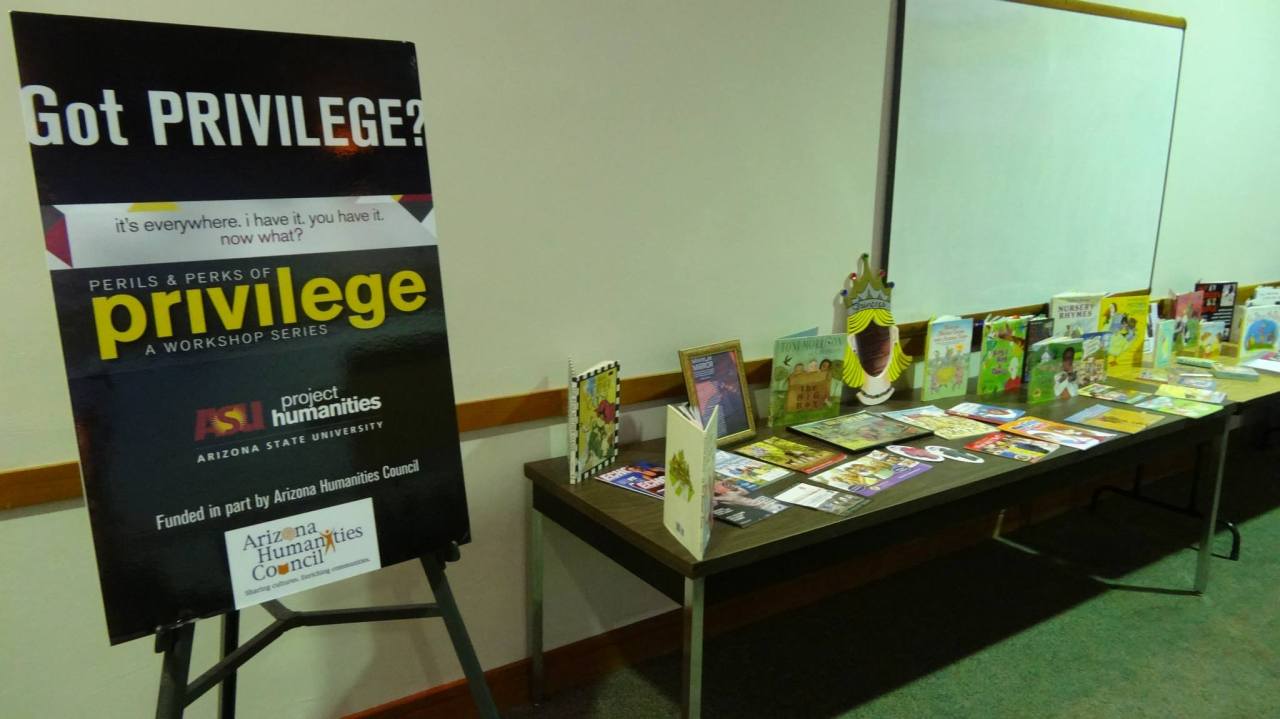
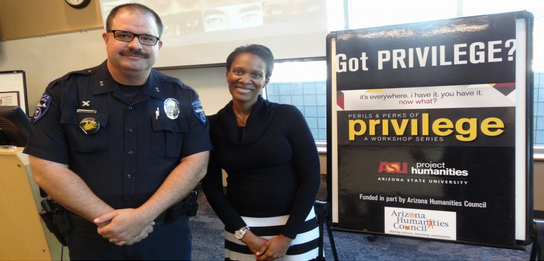
Privilege. I have it. You have it. Now what?
I've come to realize that I've drilled the importance of self-reflection into this blog, but not once have I described what self-reflection is, or what it looks like in the context of privilege. I'm going to try to fix that as best as I can.
Self-reflection, in layman's terms, is "meditation or serious thought about one's character, actions, and motives." It's taking a moment in your life to pause and critically contemplate the nature of your life, your self, and your actions. In a culture where we are all about self-validation, all about instant gratification, and life is constantly on the go, go, go, we have reached a destitute poverty of self-reflectors. Its gotten to a point where we don't even know what it looks like anymore. We don't even know where to begin.
Is self-reflecting self questioning?
Is it investigating? Excavating?
How long does it take?
Ten minutes?
Ten years?
I think the answer varies from person to person, but reflection in the context of privilege, in my opinion, is mostly based on observations that lead to an irreversible sort of awareness. It's an everlasting process. With different experiences, you become aware of different kinds of privilege. For example, I'd never really thought of able-bodied privilege until I started writing for this blog.
The real challenge comes when we start to deny the privilege that we have discovered, when we blow off multiple observations we've made as irrelevant to the conversation of unconscious bias.
A great example of the self-reflection process can be read in this article from the Huffington Post.
Gloria Atanmo exemplifies what it is to critically dissect observed disparities and sort them into privileges she has, many of which (such as African-American Privilege) she'd never consider a privilege previously .
Self-reflection varies on the person of course. What is reflection to me, to Atanmo, or her editor, could be entirely different from somebody else's "aha!" moment in privilege.
So what is self-reflection to you? Have you had any big "aha" moments worth that completely shifted your understanding of privilege?
Feel free to share in the comments below!
Sunday, August 30, 2015
And the Moonman for Best Hip Hop video goes to.. #VMAs http://t.co/SWRN5MPOOT
— MTV (@MTV) August 31, 2015
Nicki
Manaj's acceptance video has been a buzz all throughout social media
for the past few days. Her firm, assertive stance on white
artists winning awards by appropriating black artists' styles has
earned her a title as a revered voice of reason in the music
industry: a beacon of light. Manaj further inspired fans on stage at
the VMA's, where she called host Miley Cyrus out for her
tone-policing comments in a recent Time interview where
she claimed that Manaj was hurting her cause by not being
"polite."
As
awesome as it was, the speech was the end all to a greater issue. Not
to cultural appropriation, and especially not to tone-policing: an
issue that remains a huge threat to oppressed peoples outside of the
pop culture scope. However, as Maisha
Z. Johnson points out in a recent Everyday
Feminism article,
the whole ordeal does provide an important lesson to be learned, and
creates an ample opportunity to those blinded by their
bias to step forward and educate themselves.
Check out the article here.
Post
your thoughts in the comments below.
Sunday, July 19, 2015
It's easy to admit that privilege exists, but admitting it exists in ourselves is a whole other beast, and it seems like the more privilege you have, the less you actually get the concept of privilege. Personal accountability is a bullet dodged far too often, and according to a study released this past week by the Journal of Experimental Social Psychology, the reason why comes with a common misconception of what privilege actually looks like.
Accourding to a report by the Pacific Standard, during the study a group of 94 and 91 participants respectively were administered two different surveys: one covering racial inequality in America and the other childhood experiences. One group answered the survey straight away, while the other read a paragraph providing evidence of white privilege in multiple aspects of society. Researchers found that those who read the paragraph first were more likely to deny white privilege in their survey, but also more likely to claim harship in the other one.
They further predict that "...such evidence will be threatening and that people will claim hardships to manage this threat. These claims of hardship allow individuals to deny that they personally benefit from privilege, while still accepting that group-level inequity exists."
In other words, many fail to realize that a life with privilege is not a life without hardship, and just because one is oppressed in a single way, does not mean they do not benefit from privilege in any aspect at all. Tom Jacobs, author of the Pacific Standard article mentioned above, argues that we like to believe that in this country everything we gain is based off of our own merits, and when this idea is threatened, we feel offended, we feel like we're being told that we don't earn what we have. And yet, being accountable for one's personal privilege has nothing to do with denying their merits, but rather, admitting advantages. It takes a great degree of maturity to admit there is a difference between the two, but make no bones about it, a difference does exist.
Do you see individuals deny their privilege frequently? Do you agree with this study's explanation for this behavior? Express your thoughts below!
Accourding to a report by the Pacific Standard, during the study a group of 94 and 91 participants respectively were administered two different surveys: one covering racial inequality in America and the other childhood experiences. One group answered the survey straight away, while the other read a paragraph providing evidence of white privilege in multiple aspects of society. Researchers found that those who read the paragraph first were more likely to deny white privilege in their survey, but also more likely to claim harship in the other one.
They further predict that "...such evidence will be threatening and that people will claim hardships to manage this threat. These claims of hardship allow individuals to deny that they personally benefit from privilege, while still accepting that group-level inequity exists."
In other words, many fail to realize that a life with privilege is not a life without hardship, and just because one is oppressed in a single way, does not mean they do not benefit from privilege in any aspect at all. Tom Jacobs, author of the Pacific Standard article mentioned above, argues that we like to believe that in this country everything we gain is based off of our own merits, and when this idea is threatened, we feel offended, we feel like we're being told that we don't earn what we have. And yet, being accountable for one's personal privilege has nothing to do with denying their merits, but rather, admitting advantages. It takes a great degree of maturity to admit there is a difference between the two, but make no bones about it, a difference does exist.
Do you see individuals deny their privilege frequently? Do you agree with this study's explanation for this behavior? Express your thoughts below!
Subscribe to:
Posts (Atom)
Search
Popular Posts
-
This weekend everyone on my Facebook feed seemed to be up in arms over Jaden Smith wearing a dress to coachella. I don't really und...
-
Last week I came across an article arguing that the word "thug" is the new "n----r." Could this be true? This ...
-
Earlier this week Disney released its design for their first Latina princess ever. Corks were blown off of campaign bottles, parades fill...
Archive
Powered by Blogger.