Sunday, November 23, 2014
This morning, Michael Eric Dyson, a professor of sociology at Georgetown University and former mayor of New York City, Rudy Giuliani got into an argument that was so heated I probably could have fried an egg on the laptop I was watching it from. Tonight's post was supposed to be on the disproportion of global access to a quality education; however, when I came across this video it felt like I was struck by lightening. I had to write my comment down: Rudy Giuliani's assertion that law enforcement needs to crack down on black offenders more than racial discrimination is not only ridiculous but down right offensive. I was disgusted by the ignorance of his comment.
The video was short, but the few words that were exchanged between the two men seemed to be enough to completely mirror a conflict in our communities' streets right before my very eyes. If the events of past two years have taught us anything it's that racial discrimination is a societal plague that has yet to be cured and that has proven to be fatal. We'd like to believe that by 2014, bigotry like this has been eradicated, and that's why we like to make excuses as Mr. Giuliani did when he said that the real problem lies within the races themselves. Unfortunately, this kind of mentality only furthers society away from progress. Pointing fingers in the wrong direction only enables the issue to continue as is.
Throughout the interview, Mr. Giuliani continued to stress the statistic that 93% of black victims of violence are attacked by offenders of the same race. Sure, with a figure like that, it's easy to say that white offenders aren't the issue here, but that's completely missing the point. Nobody is implying that white offenders are the issue. Nobody is suggesting that there's been a new-age serge of white supremacists killing off African American teens. To me these are the only claims where yes, the statistic that 93% of black victims of violence are attacked by offenders of the same race proves to be an effective use of devil's advocate.
However, this is not the case. The root of the problem is not white police officers, it's society's tendency to hold onto racial stereotypes.
I feel like too many people live in this bubble where the racism that exists is directly proportionate to the racism that they see. I know I'm one of those people. It's 2014, I know that there are good people and bad people, criminals and law abiding citizens and criminals, and that these qualities in a person should never be seen as directly associated with race. Because of this, I just assume that racial profiling is a tendency isolated in a few people. This past Monday, I came across a rude awakening when this link was shared in a thread over Gmail. It shows the proportion of arrest rates of black and non-black citizens in various American cities Orange dots represent zero disparity between black and non-black arrests, green represent small disparities, and blue represent large disparities.
Here's a map of the country:

Here's Ferguson:
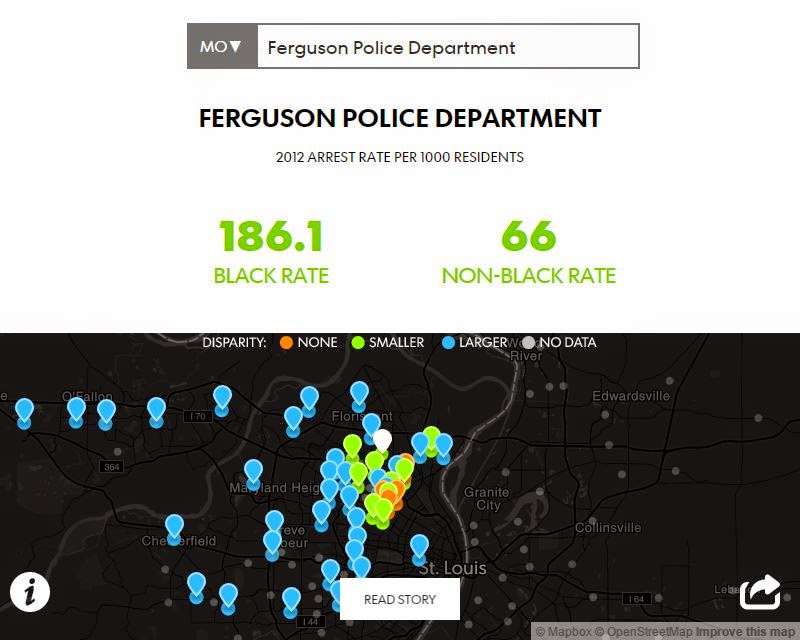
Here's Mesa, Arizona:

I was shocked when I saw these maps. I have spent my whole life thinking that my community was immune to racial profiling, but the opposite has proved to be true. It seems that the same concept applies to the rest of the country as well. My take on this is that in some cases a disparity makes sense. For example, if a city's population is predominately black, then of course the black arrest rate will be the highest. For a country where African Americans make up only 14% of the population, this map is overwhelmingly blue and green. As I watched the NBC Newsroom debate on violence in black communities, my thoughts went back to these pictures. Mr. Giuliani says that racial profiling isn't what's causing all of this turmoil, that rather the problem is isolated in black communities alone. But they numbers, they speak for themselves.
Mr. Giuliani's comments scare me because he is one voice that represents millions. There are people out there who see this map and will tell themselves that every single one of these arrests was sensible and justified, who will argue statistic after statistic on minority incarceration and recidivism before they consider that maybe the crimes weren't committed by the ones being arrested. I'd say that we all know at least five off the top of our heads. This mentality is toxic to our communities. Saying that the solution to black victimization is cracking down on interracial violence is like trying to get rid of a weed by pulling of a couple of its leaves. Sure, it's a part of the problem, but that weed is going to stay where it is and grow more and more until it is pulled out roots and all.
Mr. Giuliani's comment is a wake up call if anything. Yes, it is 2014 but people will still believe what they want to. The question is, what do we do about it? Do we try to convince them otherwise or do we just leave the bigots behind in the movement?
I believe that a bit of the problem lies in all of us, whether it's because of ignorance, or a lack of motivation to cure it. It's up to everyone to help be the change by finding the source of the problems and tackling it head on, even if putting the blame elsewhere is easier to do. The first step is accepting responsibility, then possibility and then moving forward from there.
Thursday, November 20, 2014
Growing up, my father was always worried about what people would think of our family. “Those jeans are ripped, go change.” “Read this book on how to diet properly.” I was always confused as a child, as to who would care if my pants were a bit high, or if my sister’s stomach was a bit big. But as it turns out, people stare. And they aren't sweet about it.
People always look away when they are caught staring. As if they weren't caught in the act. But my father was never afraid of the eyes on our family, but the thoughts and faces people made. And boy did people make faces. The Hispanic family shopping in a primarily white neighborhood; ‘disgusting’ their faces would say.
My mum found comments about her weight hilarious. The words “YOU'RE FAT” were viciously thrown through the air. “And…?” my mother would reply, “I already know.” People were shocked at the response. How can she be okay with that? How could anyone be okay with being overweight?
I am naturally a thin person. I wear small shirts, and skinny jean pants because they fit me like normal ones. But my siblings are not naturally thin. My twin really likes his belly, and my sister complains about her pant sizes constantly changing. Being thin is a privilege I have, and growing up with people who don’t have that privilege helps me realize this.
But not all thin people realize that being thin is a privilege. I am never stared at when I eat 6 burritos from Taco Bell. Its never assumed that I have diabetes. I am not stared at in public for going on a walk. I can expect to find clothes that fits me at stores. I’m not instantly identified as sloppy. I benefit from these privileges. Do I think its fair? Of course not. Should we blame thin people? Of course not.
No person, of any body type, should be ridiculed because of their shape. A person’s daily routine shouldn't make then a public item to make a joke out of. People like my mother shouldn't be labeled unhealthy because of how she looks. And the source of these problems, are the biases we all have as a culture.
Fat shaming is ingrained in our society via biases we all have as people. Like the common belief that being fat is something to be laughed at. Or beliefs that being thin is the average among people, leading to stores carrying products that large portions of the population can't wear.
So how do we prevent our bias from showing through? Well first of all, by identifying that it exists. Photographer Haley Morris-Cafiero started an art project called Wait Watchers, where she, as a fat person, take photos of people’s reactions to her just doing daily tasks. The project aims to place a focus away from her weight and towards the people making faces at her.
As a thin person, I live my life with inherent privileges. I enjoy eating my 6 burritos from Taco Bell without getting ridiculed. But others can't. Not all people are like me. Recognizing that fact is how we, as a culture, start to provide safer spaces for people of all identities.
Monday, November 17, 2014

I came across this picture a couple of months ago online and I thought it was priceless. Not priceless as in hilarious, just...invaluably accurate. Although, not all of us are circles.This, of course isn't just limited to circles, I'm sure further down the wall there were some triangle holes and square holes, maybe even some nonagonal holes, but the point is, it takes a certain quality to get past certain "walls."
These qualities are what we call privilege. Unlike in this picture, it isn't so blatantly obvious who has what privilege, but I believe that it boils down the concept of privilege and some basic no no's pretty well.
Insisting something is easy is one of the worst ways that we can impose our privilege on others. Sometimes, it doesn't matter how hard you work or how confident in yourself you are. You will always be a triangle, and that hole will always be circular. There is nothing more aggrivating than having somebody insist that, regardless of your qualities or the issues you face in your life, you have the ability to simply walk through any obstacle in life as if they were tailor made to let you pass. It's like saying every person in every financial situation can afford to buy a house, or that anybody can get married without any issues, or that under every employer equal work means equal pay. None of these are true, but so many times we find ourselves slipping up by assuming that things are as easy for everyone else as they are for us.
Be mindful of who you are and what you say to others, because the cruel reality is that we don't have equal opportunity across the board. That's the basic concept of privilege.
Sometimes that's a little hard to get, but I feel as if this comic does a really great job of simplifying it so I had to share.
Thoughts?
Friday, November 14, 2014
Teaching WEB DuBois’ The Souls of Black Folk (1903) last night to my undergrads at ASU, I was reminded that the context of that piece and his rival Booker T. Washington’s Up from Slavery is really white privilege, about what to do with blacks just freed from slavery. While DuBois asks the perennial question at the turn of the century—How do we measure progress?—the question is really one that begs a critical examination of American racism that will show its head no matter how much hall sweeping and brick building Booker T. recommends that free backs do to demonstrate their worth and usefulness.
To acknowledge that racism in America exists is to inherently recognize that whiteness has long been the unchallenged and unproven mark of beauty, achievement, morality and accomplishment. While Booker T. may be practicing his trickster skills in order to persuade/ seduce his rich white supporters to contribute significant funding to begin and keep open the historical Tuskegee Institute in Alabama, DuBois refused to accept that kind of soul-selling of blacks, offering instead a real plan for self-reliance intellectually and philosophically, albeit an elitist perspective.
My personal connection with the DuBoisian philosophy acknowledges that depending on someone to approve your actions or you is counter to the argument about self-reliance racially, socially, and politically.
Monday, November 3, 2014
As I've mentioned before, when it comes to my financial situation, I have what I consider the best of both worlds. My parents are divorced. My father makes a pretty good sum of money while my mother...not so much. Her annual income is anywhere from a quarter to an eighth of his and my dad makes a good sum of money, but no, an eighth of that does not make for comfortable living by any means. But I feel lucky to come from homes that are so diverse. On one hand, my dad does a pretty good job of making sure that I have what I need even when my mom is struggling financially, on the other, I do know what it is to be without and this gives me a special empathy for the poor that only ones who have lived in poverty can obtain and I consider this a great gift, but I am willing to admit that I am privileged.
I am privileged.
There. I said it.
I am privileged because despite the fact that I currently live in a low income household, I am well clothed, well fed, and well educated. Not only do I have the opportunity to these things, but my living conditions grants me the ability to take a hold of these opportunities and make them real. Not everybody has that. Some people can have the opportunity to be well educated, but they have disabilities or illnesses that make it extremely difficult to be receptive in a classroom setting. Some have the opportunity to have a roof over their head, clothes and food, but have to chose safety over comfort because they come from abusive homes. As a resident of a town as vanilla as Mesa, Arizona who is perfectly capable of reaping the benefits of being a resident of Arizona, I am very, very privileged.
But I wonder, is there a right way to live in privilege? Is there something that we are supposed to do past acknowledging the fact that we are privileged? Are we supposed to help everybody who doesn't have the same privileges as us get a leg up in the world?
Earlier this week I was thinking about the unique position the diversity of my family has put me in, and I contemplated how I could make the very best of it. So I reflected not only on myself but the people around me who have privilege in so many aspects and I wondered, what are people with more supposed to do?
I think the answer is to give back. I don't think we're supposed to push our privileges away. Reaping the benefits of one's own privilege is fine, so long as you use these benefits to give back, more specifically, to give back to the ones who have less, who are under privileged.
.
Tuesday, October 21, 2014
My mother is a woman of many words. Many repeated words, actually. And it's ironic that her daughter, of all people, writes on a blog about privilege because if I were to make a guess, I'd say her top words are (next to "Chicana") rich, white, and privilege. And just to clarify for those who aren't living in Mesa, Arizona, these three words are basically interchangeable. The members of this community are, for the most part, very affluent and predominately white. As a Hispanic family who struggles to keep above the poverty line, the members of my household are, on paper, a clear minority. Off paper, when it comes to my sisters and I, not so much, but we'll dive more into this one another week. For now, the focus is my mother who, over the years, I have discovered an overwhelming bitterness in, especially for the rich, white members of our community.
It's through this bitterness that "privilege" was introduced to me as a dirty word. After my parents divorced, I was taught that we were fighting against every light skinned, nicely dressed lady I bumped into on the street because it is the privileged that are giving us dirty looks, the privileged cutting us off in the school parking lot, the privileged taking all of the good part-time jobs, the scholarships, the everything-that-is-affordable just because they have the money to take what is theirs. Our lives were hard, but it was the privileged who were oppressing us. At least, that's what I was taught.
It's through this bitterness that "privilege" was introduced to me as a dirty word. After my parents divorced, I was taught that we were fighting against every light skinned, nicely dressed lady I bumped into on the street because it is the privileged that are giving us dirty looks, the privileged cutting us off in the school parking lot, the privileged taking all of the good part-time jobs, the scholarships, the everything-that-is-affordable just because they have the money to take what is theirs. Our lives were hard, but it was the privileged who were oppressing us. At least, that's what I was taught.
Is teaching your children that wrong? Yes.
And yet, it all feels completely justified. My mom is a Hispanic who grew up in Arizona, a part of a generation that forgot how to speak Spanish because their bilingual, bruised parents told them English was the only safe thing to speak. We moved to Mesa, Arizona proven to be the most conservative city in the U.S. in the heat of SB1070. Discrimination is not just the occasional supermarket bigot, it is something that fills the desert air, makes it thick and suffocates the minority. My mom knows that well enough to fully warrant her bitterness. And further, how can a woman, a mother, not feel bitter about her own financial crisis when her children are surrounded by a pool of students more comfortable than they ever could be? When MORE is a tangible, but untouchable reality swinging in front of her face on a a day-to-day basis?
The way she feels, it makes sense.
But is it right?
That is the question I am posing today. And my opinion is that, when it comes to Privilege Profiling, empathy is the only thing that can really be extended in this situation. I can understand why my mother says what she does, but that doesn't make it okay to say that my white friends are incapable of extending good manners because their "privlege parents" never taught them to. You don't have to be a fan of privilege. And if you don't have a godlike sense of patience for the privileged, that's okay too. However, letting your viewpoint on privilege affect the way you view and treat people with privilege is not okay.
Privilege is just another way that we are all different, and, as said before, differences are to de embraced.
But that's just my take on it.
What do you think?
Tuesday, October 7, 2014
College, College, College!!!
As a senior in high school, college readiness is constantly being thrown in my face, and because of this college never stops coming up. This week, my AP English teacher had us organize our college portfolios, making the topic as incessant as ever. Throughout the week, I overheard a lot of interesting questions and comments, and I felt like sharing a couple of them on this blog:
"I'm supposed to write an "adversity essay" for _____University, but nothing bad has ever happened to me. It's really unfortunate to be a middle class white girl."
"Like, I get why minorities get all the scholarships, but it's still really unfair."
"My parents make too much money for me to get financial aide. It sucks."
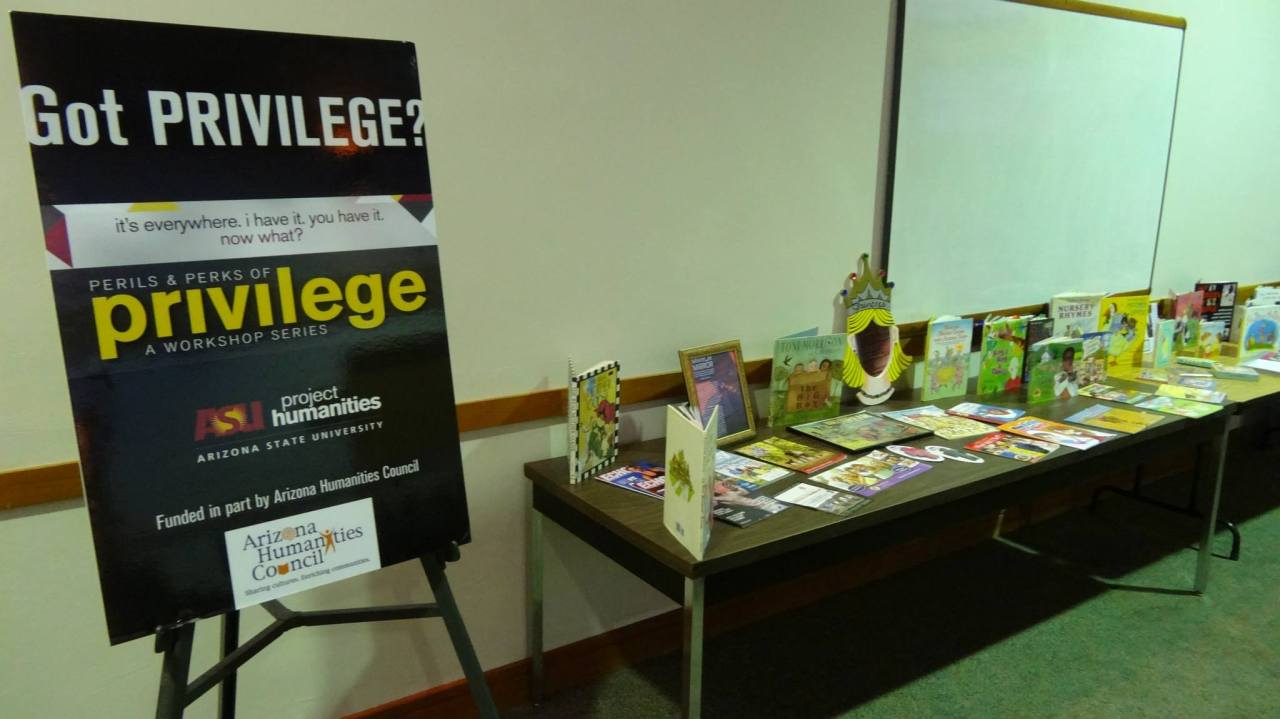
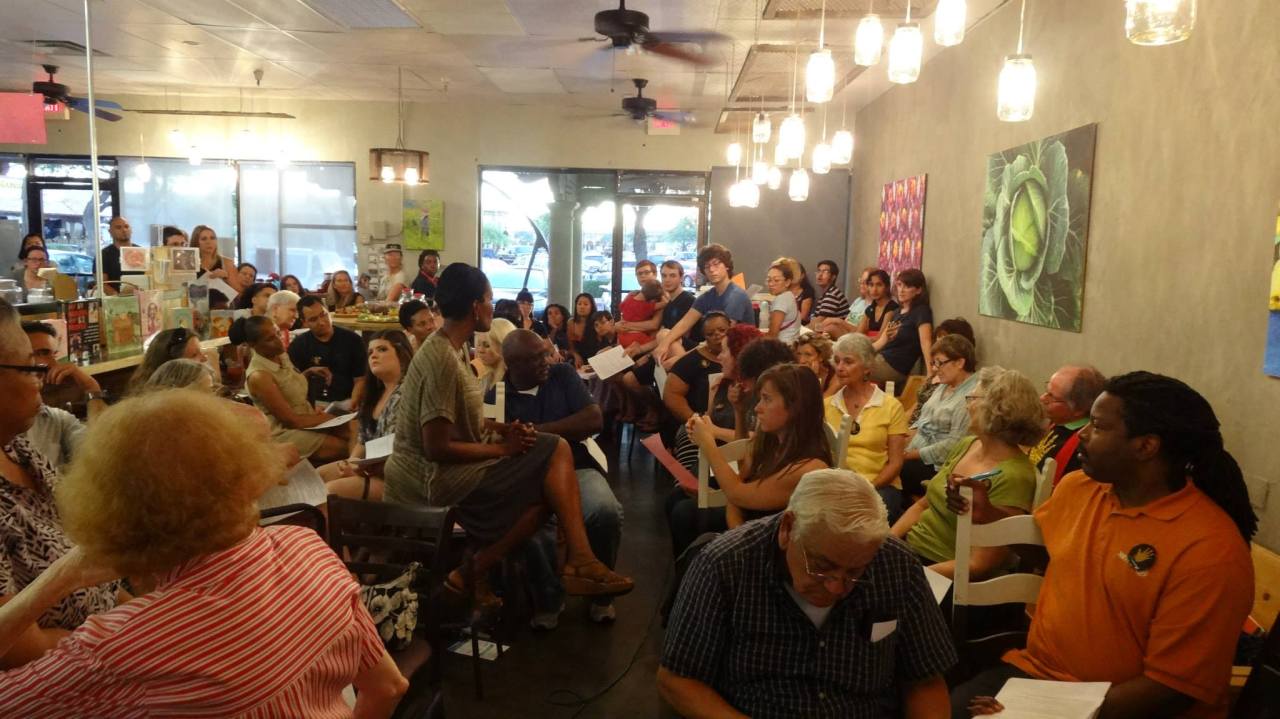
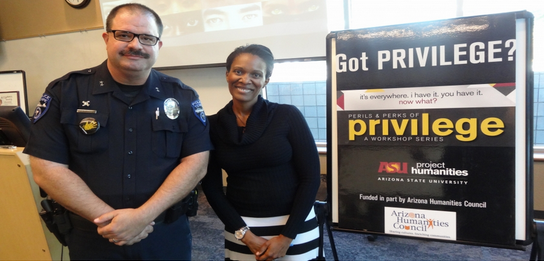
Initially, I was a little annoyed by these statements, especially since I knew for a fact that all of these 'quotees' were fairly well off, but, after mulling it over for a while, I thought back to the name of the privilege workshop Project Humanities held this summer: The Perils and Perks of Privilege. When we hear the word privilege, the first, and usually only, thing we think about are the perks. By having privilege, we avoid a multitude of conflicts in our life, be it depression, discrimination, financial instability ect. ect, we all dodge some kind of bullet in some way. But what about the perils? How does our privilege put us at a loss?
Here's a hint: It has nothing to do with scholarships.
The greatest disadvantage our privilege causes us is a lack of understanding for others. So many times, we simply focus on the problems that occur within the context of our own privilege. "Yes, I have had an incredibly easy life, but I have little life experience because of it." "Yes, I am middle class, but I'm afraid of student loans too." And it's perfectly normal and acceptable to think like this; however, when one acknowledges the perils of their own privilege without acknowledging other's disadvantages, it marginalizes specific groups of society. This is clearly seen through my classmates' quotes. This marginalization causes these groups of people to be neglected, which is bad in of itself. However, if this mentality goes untreated, it can evolve into prejudice, which can not only cause minorities (and I'm not just talking about racial or cultural minorities here) to be neglected, but create obstacles towards breaking through any disadvantages that come with being a part of their minority.
How can prevent this from happening?
Embracing the diversity in society is one thing, and it is a good thing, but we could be doing so much more. Try looking at the people around you, and then yourself, and then try to think of all the ways that your privilege makes you a part of the problem. Are there any privileges that you have that blind you from understanding the suffering of others? Then, go beyond bias. Think of ways to be a part of the solution. This is a responsibility of all of us, not just those new to privilege. We can't change the fact that we're all different, but we can change how these differences impact each other's lives. All men were not created the same, but they were created equal, and its time that the community demonstrates this.
Subscribe to:
Posts (Atom)