Tuesday, October 21, 2014
My mother is a woman of many words. Many repeated words, actually. And it's ironic that her daughter, of all people, writes on a blog about privilege because if I were to make a guess, I'd say her top words are (next to "Chicana") rich, white, and privilege. And just to clarify for those who aren't living in Mesa, Arizona, these three words are basically interchangeable. The members of this community are, for the most part, very affluent and predominately white. As a Hispanic family who struggles to keep above the poverty line, the members of my household are, on paper, a clear minority. Off paper, when it comes to my sisters and I, not so much, but we'll dive more into this one another week. For now, the focus is my mother who, over the years, I have discovered an overwhelming bitterness in, especially for the rich, white members of our community.
It's through this bitterness that "privilege" was introduced to me as a dirty word. After my parents divorced, I was taught that we were fighting against every light skinned, nicely dressed lady I bumped into on the street because it is the privileged that are giving us dirty looks, the privileged cutting us off in the school parking lot, the privileged taking all of the good part-time jobs, the scholarships, the everything-that-is-affordable just because they have the money to take what is theirs. Our lives were hard, but it was the privileged who were oppressing us. At least, that's what I was taught.
It's through this bitterness that "privilege" was introduced to me as a dirty word. After my parents divorced, I was taught that we were fighting against every light skinned, nicely dressed lady I bumped into on the street because it is the privileged that are giving us dirty looks, the privileged cutting us off in the school parking lot, the privileged taking all of the good part-time jobs, the scholarships, the everything-that-is-affordable just because they have the money to take what is theirs. Our lives were hard, but it was the privileged who were oppressing us. At least, that's what I was taught.
Is teaching your children that wrong? Yes.
And yet, it all feels completely justified. My mom is a Hispanic who grew up in Arizona, a part of a generation that forgot how to speak Spanish because their bilingual, bruised parents told them English was the only safe thing to speak. We moved to Mesa, Arizona proven to be the most conservative city in the U.S. in the heat of SB1070. Discrimination is not just the occasional supermarket bigot, it is something that fills the desert air, makes it thick and suffocates the minority. My mom knows that well enough to fully warrant her bitterness. And further, how can a woman, a mother, not feel bitter about her own financial crisis when her children are surrounded by a pool of students more comfortable than they ever could be? When MORE is a tangible, but untouchable reality swinging in front of her face on a a day-to-day basis?
The way she feels, it makes sense.
But is it right?
That is the question I am posing today. And my opinion is that, when it comes to Privilege Profiling, empathy is the only thing that can really be extended in this situation. I can understand why my mother says what she does, but that doesn't make it okay to say that my white friends are incapable of extending good manners because their "privlege parents" never taught them to. You don't have to be a fan of privilege. And if you don't have a godlike sense of patience for the privileged, that's okay too. However, letting your viewpoint on privilege affect the way you view and treat people with privilege is not okay.
Privilege is just another way that we are all different, and, as said before, differences are to de embraced.
But that's just my take on it.
What do you think?
Tuesday, October 7, 2014
On 6:00 PM by Unknown in Rachel Sondgeroth 1 comment
College, College, College!!!
As a senior in high school, college readiness is constantly being thrown in my face, and because of this college never stops coming up. This week, my AP English teacher had us organize our college portfolios, making the topic as incessant as ever. Throughout the week, I overheard a lot of interesting questions and comments, and I felt like sharing a couple of them on this blog:
"I'm supposed to write an "adversity essay" for _____University, but nothing bad has ever happened to me. It's really unfortunate to be a middle class white girl."
"Like, I get why minorities get all the scholarships, but it's still really unfair."
"My parents make too much money for me to get financial aide. It sucks."
Initially, I was a little annoyed by these statements, especially since I knew for a fact that all of these 'quotees' were fairly well off, but, after mulling it over for a while, I thought back to the name of the privilege workshop Project Humanities held this summer: The Perils and Perks of Privilege. When we hear the word privilege, the first, and usually only, thing we think about are the perks. By having privilege, we avoid a multitude of conflicts in our life, be it depression, discrimination, financial instability ect. ect, we all dodge some kind of bullet in some way. But what about the perils? How does our privilege put us at a loss?
Here's a hint: It has nothing to do with scholarships.
The greatest disadvantage our privilege causes us is a lack of understanding for others. So many times, we simply focus on the problems that occur within the context of our own privilege. "Yes, I have had an incredibly easy life, but I have little life experience because of it." "Yes, I am middle class, but I'm afraid of student loans too." And it's perfectly normal and acceptable to think like this; however, when one acknowledges the perils of their own privilege without acknowledging other's disadvantages, it marginalizes specific groups of society. This is clearly seen through my classmates' quotes. This marginalization causes these groups of people to be neglected, which is bad in of itself. However, if this mentality goes untreated, it can evolve into prejudice, which can not only cause minorities (and I'm not just talking about racial or cultural minorities here) to be neglected, but create obstacles towards breaking through any disadvantages that come with being a part of their minority.
How can prevent this from happening?
Embracing the diversity in society is one thing, and it is a good thing, but we could be doing so much more. Try looking at the people around you, and then yourself, and then try to think of all the ways that your privilege makes you a part of the problem. Are there any privileges that you have that blind you from understanding the suffering of others? Then, go beyond bias. Think of ways to be a part of the solution. This is a responsibility of all of us, not just those new to privilege. We can't change the fact that we're all different, but we can change how these differences impact each other's lives. All men were not created the same, but they were created equal, and its time that the community demonstrates this.
As a senior in high school, college readiness is constantly being thrown in my face, and because of this college never stops coming up. This week, my AP English teacher had us organize our college portfolios, making the topic as incessant as ever. Throughout the week, I overheard a lot of interesting questions and comments, and I felt like sharing a couple of them on this blog:
"I'm supposed to write an "adversity essay" for _____University, but nothing bad has ever happened to me. It's really unfortunate to be a middle class white girl."
"Like, I get why minorities get all the scholarships, but it's still really unfair."
"My parents make too much money for me to get financial aide. It sucks."
Initially, I was a little annoyed by these statements, especially since I knew for a fact that all of these 'quotees' were fairly well off, but, after mulling it over for a while, I thought back to the name of the privilege workshop Project Humanities held this summer: The Perils and Perks of Privilege. When we hear the word privilege, the first, and usually only, thing we think about are the perks. By having privilege, we avoid a multitude of conflicts in our life, be it depression, discrimination, financial instability ect. ect, we all dodge some kind of bullet in some way. But what about the perils? How does our privilege put us at a loss?
Here's a hint: It has nothing to do with scholarships.
The greatest disadvantage our privilege causes us is a lack of understanding for others. So many times, we simply focus on the problems that occur within the context of our own privilege. "Yes, I have had an incredibly easy life, but I have little life experience because of it." "Yes, I am middle class, but I'm afraid of student loans too." And it's perfectly normal and acceptable to think like this; however, when one acknowledges the perils of their own privilege without acknowledging other's disadvantages, it marginalizes specific groups of society. This is clearly seen through my classmates' quotes. This marginalization causes these groups of people to be neglected, which is bad in of itself. However, if this mentality goes untreated, it can evolve into prejudice, which can not only cause minorities (and I'm not just talking about racial or cultural minorities here) to be neglected, but create obstacles towards breaking through any disadvantages that come with being a part of their minority.
How can prevent this from happening?
Embracing the diversity in society is one thing, and it is a good thing, but we could be doing so much more. Try looking at the people around you, and then yourself, and then try to think of all the ways that your privilege makes you a part of the problem. Are there any privileges that you have that blind you from understanding the suffering of others? Then, go beyond bias. Think of ways to be a part of the solution. This is a responsibility of all of us, not just those new to privilege. We can't change the fact that we're all different, but we can change how these differences impact each other's lives. All men were not created the same, but they were created equal, and its time that the community demonstrates this.
Tuesday, September 23, 2014
On 5:30 PM by Unknown in Rachel Sondgeroth 1 comment
Summer is ending, and it's about this time where all the of the responsibility begins to fall on the shoulders of the high school student. First quarter projects are coming up, books are making their way into the curriculum and the speech and debate season is just around the corner. Needless to say, it's been a busy couple of weeks.
I'm still getting used to this whole blogging thing, and I'm not exactly sure how to get access to the articles in the HUM 101 database yet, so, as we ease ourselves into a rhythm, I decided to go a little light today and reflect on the first time I really made myself think about privilege. It was early June this year. I asked Dr. Lester if there was anything I could do to help out long distance, and he suggested that I comment on some of the articles posted on the Project Humanities facebook page, so I did. Once. Not exactly a five-star intern, I know, but some good did come out of it. From this one article, I learned two invaluable lessons.
First: Acknowledging Privilege can be a slippery slope.
The article I focused my attention to was the Huffington Post's "Explaining White Privilege to a Broke White Person" by Gina Crosley-Corcoran. The author made a lot of great points. For example, that privilege is not exclusive to Caucasian men, but to men in general, to Americans, to the able-bodied, the intelligent and to pretty much anybody who could one-up anybody else in any kind of way. Even so, I couldn't help but feel as if she sounded whiny in her piece, as if she felt the need to constantly justify that, as a white person who suffered financially in her childhood, she was not nearly as privileged as most people would assume.
And that's how acknowledging privilege is a slippery slope. Many times, while one is acknowledging privilege, it become more about justifying oneself, or minimizing the amount of privilege they appear to have, rather than reflecting or trying to understand those who don't have the same privilege.
Does that make sense?
Here's an example: My family has struggled financially ever since my parents got divorced, but I go to a high school that is in the heart of a fairly affluent community. Every time a close friend invites me over for the first time, I'm quick to comment on their gigantic and lavish and all around perfectly beautiful home. And, since they are close friends of mine, later on I will also add "You know how fortunate you are, right?" To this I am not only referring to their gigantic and lavish and all around perfectly beautiful homes, but the fact that they're in a two-parent household, the fact that they've never had to worry about money, and their family's overwhelming sense of stability. And, since they are close friends of mine, they will understand that when I call them fortunate, I am referring to all these things. And yes, I am definitely making a bit of mule of myself when I do this, but I feel like it's something important to air. Even more so, it is important to see what they'll say. Sometimes they'll agree. Sometimes they'll get defensive, even offended. For every person who nods, silently counting their blessings, there are two who decide to list every minor conflict they've faced in their life since the fourth grade concluding with "See? It isn't always easy." Well, it isn't always easy.
But we don't call out privilege to say that somebody else has it easier, we do it so that we can acknowledge and reflect upon it. And we use this reflection to better ourselves, because when you take everything that you have for granted, nothing really matters. We use this acknowledgment to better our world because if you honestly think that we're equal, you aren't going to do a thing to promote equality. Which ties into the other lesson this article taught me and that is...
Second, the only "bad" privilege, is overlooked privilege.
There really is nothing bad about being privileged. You can't help that you're cisgendered, rich, white, or healthy. And, quite frankly, being angry at somebody for their privilege is just plain unreasonable. I think that we all need to keep this in mind. The word "privileged" has a connotation synonymous to "stuck up" or "snob." But the opposite is true. There are plenty of extremely nice people who are extremely privileged. I’ve learned that from my classmates. Privilege is simply a part of who we are, and, as said before, if we want to make anything from it, we need to stop sweeping it under the rug and start embracing it.
Crosley-Corcoran’s main claim was that “white privilege” isn't the only kind of privilege, and I agree. There are several different types of privilege, but being able to make an impressive list of them off of the top of your head means nothing. In order to create real progress, we must be open about the privilege we have, and be open to use our privilege to help those who don't have what we do . The question now is, what other privileges do we as a society face? And what can we do to take advantage of this privilege for others?
More answers to come!
Friday, September 19, 2014
Last night I had the honor of hearing Nikki Giovanni speak to
a crowd of about 1300 people at the Mesa Arts Center. Her talk was punctuated by numerous comments that were both humorous and insightful. Several of which
I’m sure I’ll be mulling over for many, many months. There was one thing she said though, that
brought me so much hope. Hope, is something I've
been struggling with lately.
Before Giovanni’s talk, I attended a private reception in her
honor. A colleague and I were discussing
how sometimes it feels as though things in the world are getting worse. Beheadings are becoming an almost weekly occurrence. In certain parts of the country, a black boy,
or even girl, who happens to be near someone with a gun is suddenly in grave
danger. The Ebola epidemic is growing at
an exponential rate and is showing no signs of slowing. Nearly 300 Nigerian school girls are still missing - probably being raped and tortured while we all go on with our lives.
My colleague and I wondered if it simply appeared that things were getting
worse because of advances in social media coupled with the 24 hour news
cycle. He put forth the idea that maybe a hyper focus
on certain new stories can actually perpetuate violence or wrong doing. By the time we finished our conversation and
got in line to get some food, a thoughtful, albeit weighty silence had come
over us.
Then we went to hear Giovanni speak. If you've never had the chance to hear her give a talk, find a way to do so before you die.
She is hilarious, dead serious, and full of innovative ideas for addressing global and local problems - all while never taking herself too seriously. She's an everyday woman who just happens to be armed to the tenacity to take on just about anything.
After giving her talk, she and Dr. Lester sat
on stage and he fielded questions from the audience and asked a few of his own
as well. One of the things he asked Giovanni was whether or not she thought we are losing our humanity. She was quick to joke that to ask whether or
not we’re losing our humanity assumed that we had some in the first place.
But after a few laughs she said something that brought me
such peace. She said that when people
are running a race and get to the point where they can see the finish line,
they often feel as if they should be running faster.
Since the finish is so close they begin to sense that maybe they should already
be there, that they should already have arrived.
For the most part, we can see the finish
line. Yes, there are people who still
hate homosexuals, Jews, people of color, and the like. However, those individuals have found themselves
living on the fringe of society. Most people
consider them to be extremists, disturbed, or grossly uninformed. No doubt, there is still a lot of work to do
in terms of bias, acceptance, and living in a world where people are not unsafe
or unaccepted simply because of who they choose to marry or how they choose to
love.
But most of us want to get there.
We can see the finish line.
Some people think we already crossed it and therefore just need
to stop talking about it. That's another post, but even in that dilemma there is hope. We want the same thing. We just disagree on how close we are to achieving it.
I do believe that we still have a ways to go, but I can see the finish line. Most of us can see the finish line. That is a far, far cry from where we were as
a nation just sixty years ago.
Thank you, Nikki Giovani, for reminding me that even though
we’re not there yet, we still have cause to celebrate.
Tuesday, September 9, 2014
On 5:00 PM by Unknown in Rachel Sondgeroth No comments
Greetings! My name is Rachel Sondgeroth and I am absolutely ecstatic to be writing the first post for Privilege 101! Today's post is mostly house-keeping. Before we officially kick things off, there are a few questions that need to be answered.
First, what is Privilege 101?
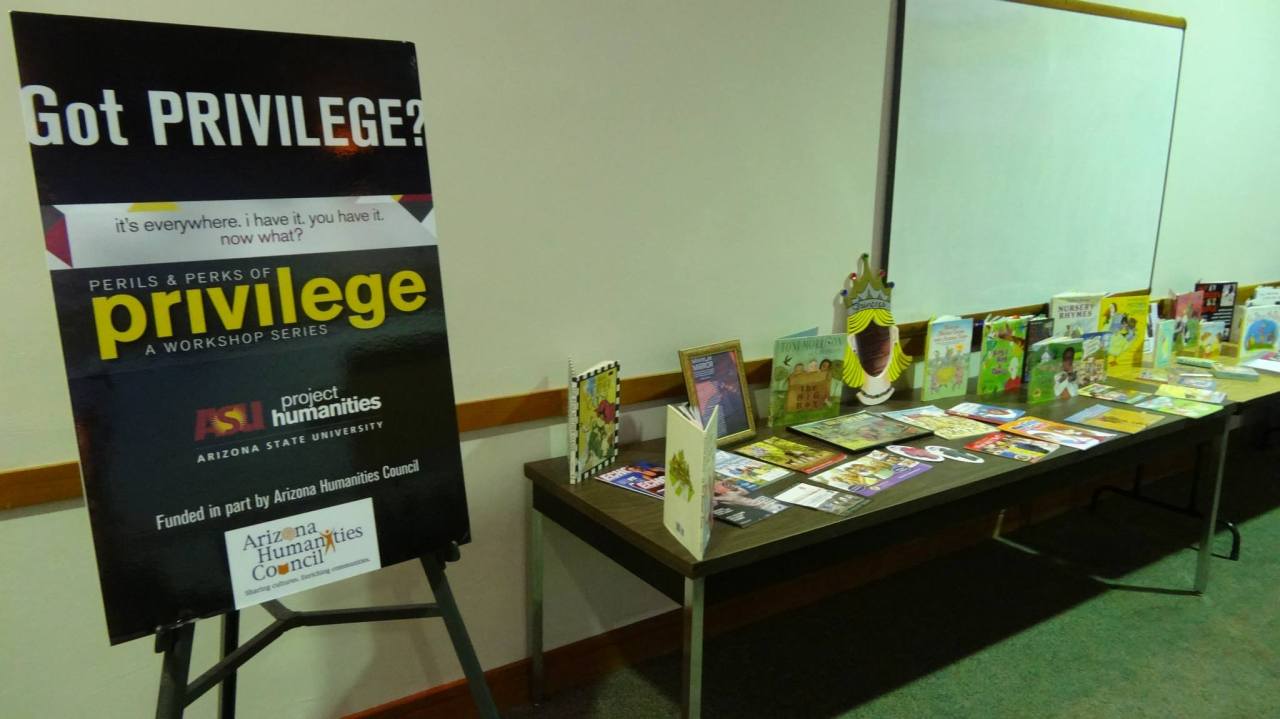
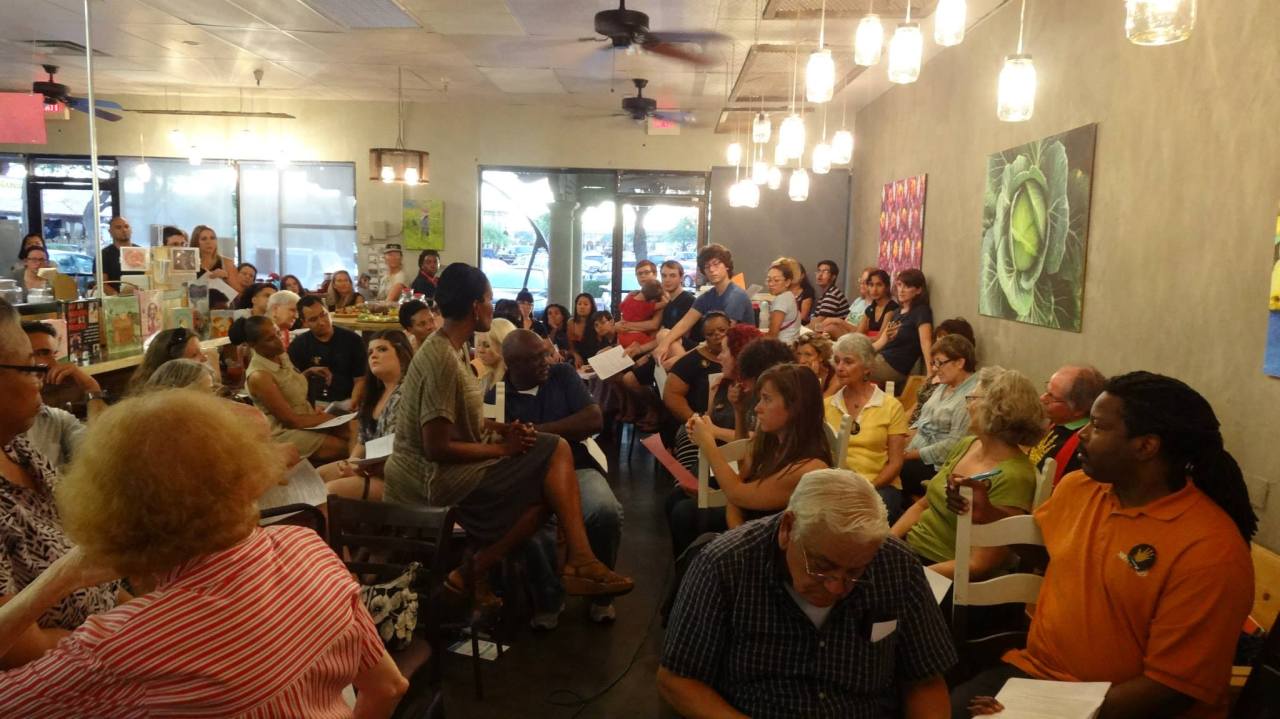
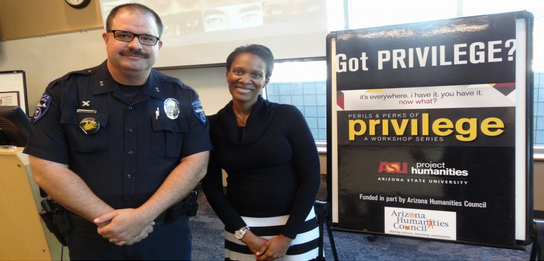
Privilege 101 is an offshoot of a series called "Perils & Perks of Privilege" by a program called Project Humanities. The Goal of Project Humanities is to promote members of the community to basically get more in touch with their humanity by talking, listening and connecting with those around us.The Perils & Perks of Privilege series, along with this blog, Privilege 101, convey these very values by encouraging others to reflect upon their own privileges, create strategies to fight their own bias, and build a better personal grasp of the diversity in our global community that way we can more effectively co-exist. As our diverse world makes more and more connections, it becomes exponentially more important that we as a society get to understand not only these cultures, but what it is within ourselves that prevent us from fully understanding them. Privilege is more than just a couple of lucky scratch-offs in the lottery of birth, it is an obstacle to empathy. That is why here at Project Humanities, we feel the need to write an entire blog about it! Our goal here is to raise awareness and promote understanding.
Who am I?
Once again, my name is Rachel. I am eighteen years old, and a senior at Mountain View High School. I got into contact with Dr. Neal Lester last December while researching for a competitive speech I was writing (See: Original Oratory) . My topic: Are We Losing Our Humanity? It just so happened that Dr. Lester hosted a panel discussing this very topic in Washington D.C. two years ago. I emailed him some questions, the Project came up and I instantly wanted a part of it. Since I just moved back to Arizona in July and my extra-curriculars have no trouble soaking up every second of my free time, actually getting involved has been, well, a work in progress. But! Lo and behold here I am, co-writing this blog and I could not be any more excited. I'm happy to finally be helping out and I'm eager to see what I learn along the way!
I'll be posting every Tuesday, while my co-authors, Yvette Johnson and Neal Lester, along with some other guest-posters will be updating the blog here and there on different days of the week. Overall, it's going to be a lot of fun. Did I mention that I'm excited? I'm really excited.
First, what is Privilege 101?
Privilege 101 is an offshoot of a series called "Perils & Perks of Privilege" by a program called Project Humanities. The Goal of Project Humanities is to promote members of the community to basically get more in touch with their humanity by talking, listening and connecting with those around us.The Perils & Perks of Privilege series, along with this blog, Privilege 101, convey these very values by encouraging others to reflect upon their own privileges, create strategies to fight their own bias, and build a better personal grasp of the diversity in our global community that way we can more effectively co-exist. As our diverse world makes more and more connections, it becomes exponentially more important that we as a society get to understand not only these cultures, but what it is within ourselves that prevent us from fully understanding them. Privilege is more than just a couple of lucky scratch-offs in the lottery of birth, it is an obstacle to empathy. That is why here at Project Humanities, we feel the need to write an entire blog about it! Our goal here is to raise awareness and promote understanding.
Who am I?
Once again, my name is Rachel. I am eighteen years old, and a senior at Mountain View High School. I got into contact with Dr. Neal Lester last December while researching for a competitive speech I was writing (See: Original Oratory) . My topic: Are We Losing Our Humanity? It just so happened that Dr. Lester hosted a panel discussing this very topic in Washington D.C. two years ago. I emailed him some questions, the Project came up and I instantly wanted a part of it. Since I just moved back to Arizona in July and my extra-curriculars have no trouble soaking up every second of my free time, actually getting involved has been, well, a work in progress. But! Lo and behold here I am, co-writing this blog and I could not be any more excited. I'm happy to finally be helping out and I'm eager to see what I learn along the way!
I'll be posting every Tuesday, while my co-authors, Yvette Johnson and Neal Lester, along with some other guest-posters will be updating the blog here and there on different days of the week. Overall, it's going to be a lot of fun. Did I mention that I'm excited? I'm really excited.
Subscribe to:
Posts (Atom)
Search
Popular Posts
-
This weekend everyone on my Facebook feed seemed to be up in arms over Jaden Smith wearing a dress to coachella. I don't really und...
-
Last week I came across an article arguing that the word "thug" is the new "n----r." Could this be true? This ...
-
In his comic "On a Plate," Auckland-based artist Toby Morris demonstrates both the effects and the ca...
Archive
Powered by Blogger.