Monday, May 9, 2016
People following the Academy Awards likely noticed a significant source of controversy surrounding this year’s ceremony, one likely more important than annual debate concerning who should win the actual awards. For the second year in a row, no black individuals were nominated for any of the acting roles, even though there were several black performances that many dubbed deserving. As Variety pointed out, the critically acclaimed Creed was filled with black characters in major roles and was both written and directed by African American Ryan Coogle, but the only nomination was for one of the few white actors, Sylvester Stallone. Similarly, Straight Outta Compton, a film filled with black actors and directed by the black F. Gary Gray, received a nomination only for the screenplay written by two white men. Some people, like actress Charlotte Rampling, argued that this was due to their performances not being as good as white ones, while others, mainly in comment sections of the aforementioned articles, argued that minorities’ overwhelming presence in sports or rap music made this debate hypocritical. Actors like Don Cheadle weighed in too, noting that the issue was due mainly to black actors not getting roles from studios in the first place. That statement also seemed fair; after all, people need representation in casts before they can expect nominations. But regardless of whether or not black actors deserved Oscar nominations, discrimination is a far more complicated topic than commentators on both side of the debate were making it out to be. As such, oversimplifications of the topic tend to ignore equally important topics of consideration across the entire spectrum of media.
To begin with, debates over who deserves an Oscar automatically imply that the Oscars are some kind of merit contest, one that uses objective standards to determine the best films and Hollywood stars from each year. As this article notes, the standards for judging various categories are vague and often non-binding; surprisingly, there isn’t actually a rule that voters need to view all of the films in each category. 2015’s Selma, for instance, was nominated for best picture but unseen by ten percent of voters, while 2014’s 12 Years a Slave was unseen by at least two voters who voted for it anyway due to the film’s “social relevance.” A great deal of tension surrounded the vote from the outset anyway; host Ellen Degeneres noted this in her opening monologue by quipping, “ Possibility No. 1, '12 Years a Slave' wins best picture. Possibility No. 2, you're all racists." It’s thus clear that discrimination affects the awards differently via certain films and during different years, implying some degree of subjectivity. Even ignoring the problems with judging, this isn’t that surprising; Oscar voters are ninety-four percent white, seventy-six percent men, and an average of sixty-three years old, meaning that their decisions emanate from a certain set of worldviews. And while it’s easy to claim discrimination was the reason they didn’t nominate black individuals, the more likely explanation is that they’re out of touch with black culture and lack interest in even seeing films about black experiences. That’s not much of a stretch after all, it's far easier to judge the quality of acting of those who are undergoing experiences that the viewer can personally sympathize with.
In addition to problems with the nature of the actual Oscar event are problems with discrimination across the entire film industry. Don Cheadle had a point concerning the film industry's disinterest with providing minority roles; while many white best actress winners have gone on to star in many A-list roles, black best actress winners haven’t done nearly so well, with only Halle Berry and Whoopi Goldberg gaining some degree of modern A-list recognition across Hollywood. Beyond black roles not being written, there has been a notorious trend of white-washing across the industry. Considering that white children are more likely to receive arts education in public schools than black children (59 percent to 28 percent), this is itself not surprising, but a limited number of roles being available in the first place and lack of funding to support acting education might seriously discourage young minority actors from the start. Again, it is far too simplistic to argue that the Oscars are discriminatory when so many factors play into black representation in media; unfortunately, the discrimination problem only gets worse.
2016 Oscar host Chris Rock received approbation for his humorous approach to the discrimination problems faced by black individuals within the industry, but the Oscar ceremony also took the opportunity to utilize Asian-American stereotypes with little to no self-awareness of the potential hypocrisy of doing so. While the Academy was poking fun at it’s own problems with diversity, it was also creating new ones, something criticized heavily by Asian-American actors within the community. This is something that is often ignored in discussions of discrimination in media; while it is true that black actors are often unrepresented in media, Asian and Latino/a actors face even larger problems. Latinos represent seventeen percent of the US population, but have only about five percent of film roles. While opportunities for Latinas are increasing, Latino roles are starting to disappear. Moreover, most of the roles occupied by actors are either drug or law-enforcement related, pigeonholing actors to work almost exclusively to perpetuate stereotypes. While it is true that Asians are represented in media approximately in line with their percentage of the US population, they are almost always also depicted via some stereotype. Asian women seem to be consistently depicted, across genres, in nearly identical ways, while other Asian stereotypes like emasculation and funny-sounding names seem almost universal. Many Asian actors find they actually have better opportunities if they move to the Asian film market, regardless of whether or not they can actually speak the industry’s language. Discrimination in film is a problem for all racial minority groups, not just black ones, but the problem still doesn’t even end there. Instead, it gets even more thorny.

While easy to characterize the representation of minorities in film as a problem specific to one industry, the problem is essentially the same across all media, including tv series, news broadcasting, and literature. According to the Latino Media Gap Report, Latinos compose a fraction of tv series producers, writers or directors, are depicted as criminals nearly a quarter of the times they appear in tv series, are only 1.8% of news broadcasting producers, and appear on news broadcasts only 1 percent of the time, often during stories on criminal activity. And this isn’t a problem exclusive to film and television either; it extends to literature too. Of 124 authors on the 2012 New York Times bestseller list, only three were people of color, while over 90% of the books they reviewed during 2011 were written by white authors. Even published authors run into additional problems; many books by or about black individuals are lumped into bookstore or library sections labeled “African American Fiction.” Interestingly enough, some of the best representations of minority actors come from “new media” like Youtube channels; of the top 50 single-focus Youtube channels, 18% are run by Latinos, while many of the most popular Youtube celebrities are Asian-American. As many are aware, the most popular Youtube video of all time starred Psy, a Korean singer. Though most media that has been around for more than a few decades is dominated by white presences, newer forms are changing that, due at least partially to the less-restrictive barriers to entry.
Those who have engaged with the debate over recognition of black actors at the Oscars have mostly done so in a vacuum. Their comments ignore that discrimination manifests in a number of different forms, often unplanned, but still consistently affecting minority groups across a vast range of modern media. Those who wish to address unequal representation should keep these things in mind when moving forward, and set benchmarks accordingly; if real progress is to be made in these areas, proponents must understand the numerous ways in which it both manifests and is perpetuated.
Those who have engaged with the debate over recognition of black actors at the Oscars have mostly done so in a vacuum. Their comments ignore that discrimination manifests in a number of different forms, often unplanned, but still consistently affecting minority groups across a vast range of modern media. Those who wish to address unequal representation should keep these things in mind when moving forward, and set benchmarks accordingly; if real progress is to be made in these areas, proponents must understand the numerous ways in which it both manifests and is perpetuated.
Friday, April 29, 2016
Few people seem aware of the prevalence of modern feminist efforts, many of them being confined to the internet, covered little by the media, or regionally-focused. But the few efforts that have caught on internationally still don’t seem to be recognized by the average citizen, so this will be the start of a series to remedy that.
This week we’ll cover “SlutWalks,” one of the only existing public efforts to destigmatize female sexuality and end common myths about sexual assault.
The concept of a “Slut Walk” emerged in early 2011 after a talk at a safety forum on York University’s campus. During a piece on crime prevention, a police officer chimed in to add his thoughts, noting his belief that “women should avoid dressing like sluts in order not to be victimized.” Though the officer was reprimanded and apologized after his words gained significant media coverage, two individuals, Sonya Barnett and Heather Jarvis felt that wasn’t enough. Recognizing problems both with his usage of the term “slut” and the social mores that supported his comment, they organized an event in Queens Park at the beginning of April to make a stand against similar attitudes, encouraging all participants to come without shame.Though they expected roughly 200 individuals to appear, over 3,000 showed up, some in fishnets, some in jeans and t-shirts. After a round of speeches discussing various topics related to their cause, they marched from the park to the Toronto Police Headquarters, where they briefly protested the police’s perspective on sexual assault.
After this event received significant media coverage, the movement slowly began to spread to other cities, slowly increasing momentum as they received national and international acclaim. Women turned out in London, Sydney, New Delhi, Boston, and over 250 other major metropolitan areas to support the cause, showing up in varying degrees of “slutty attire” or simple day-to-day wear. Though the initial interest in the event has died down a little, the movement is still going strong to this day; the Toronto march is now an annual event, with the group's Facebook page being consistently used as a means to expand outreach about varying consent problems.
So why is this movement so compelling for so many people? Well, for one, it’s pretty revolutionary, in the sense that it hasn’t been done before. Plenty of people have marched for equal rights and feminist causes, but few have done it nearly nude. Plenty of people have decried rape culture and victim blaming before, but rarely in march form. And while a number of scholars in recent years have restored the academic interest in women’s sexuality, those discussions rarely garner media coverage. Slut walks do garner interest though, positive or otherwise. They bring discussions of women’s rights, women’s interests, and consent into the public sphere, dragging it from the realm of academia and Cosmopolitan articles to the public square. Further, the help demolish harmful misconceptions like dress playing into the reasons for rape (most of the crimes being planned in advance by people known to the victim).
Not all of the attention they’ve gained has been positive though; some in the media question the need or efficacy of the work, while others critique the type of feminism that they’re promoting or the vitriol of the marchers. In regards to the need or efficacy or their work, this article makes a fairly comprehensive case that Slut Walks are addressing a serious issue and encouraging change in other areas. Besides cases where the attire of underage rape victims was used as proof they were “asking for it,” there is a significant body of literature that indicates that other nations still struggle with misconceptions concerning rape. Egypt, for instance, saw an upsurge of sexual assaults during the 2011 Revolution. When the UN investigated a large number of these cases, they found that over 75 percent of women assaulted were wearing conservative clothing and no makeup. Interestingly enough, over 90 percent of women in the report believed that other women encouraged sexual assault thru the way they spoke, walked, or the clothing they wore. Even if critics are right about Slut Walks being useless in the US, they at least have significant importance abroad, especially if other countries’ major cities continue to host them.
While many modern-day feminist efforts are ignored by the media, slut walks have gained a great deal of notoriety. Whether that’s due to their provocative nature or the message they promote, it means that the average individual is exposed to more perspectives on sexual assault than normal, hopefully forcing a continuous reevaluation of their beliefs. This is a significant change in how feminists engage the public in cultural conversations; hopefully we’ll see more movements like this in the future.
Friday, April 1, 2016
As a Sustainability student who is interested in the effects of pollution upon communities, I understand that the term “environmental racism” collectively represents a vast array of grievances. That said, few seem to understand what the term actually means.
Environmental racism was first discussed in a 1971 report written by the Council of Environmental Quality. In it, the council noted a link between socio-economic status, race, and risks of exposure to pollutants, an observation quickly adopted by a plethora of social groups aiming to protest the conditions of their communities. The term’s modern definition changed little in the forty-five years since; according to Robert Bullard, director of the Environmental Justice Resource Center at Clark Atlanta University, “environmental racism refers to environmental policies, practices, or directives that differentially affect or disadvantage (whether intentionally or unintentionally) individuals, groups, or communities based on race or colour.” This could include things like storing nuclear waste in certain areas more than others, siting landfills in historically segregated communities, or allowing manufacturing plants looser restrictions on water and air pollution in monoracial areas.
The recent water quality problem in Flint, Michigan has been linked to racism for a number of reasons, including the fact that the most polluted areas in the state correspond significantly to the blackest communities. This isn’t a new trend; pollution problems have reached the point that experts can fairly accurately predict both a person’s race and how long a person has to live just by knowing their Zip Code. Similarly, nuclear testing’s repeated occurrence near the Western Shoshone nation, coal plants’ consistent siting near black populations, and Asia’s electronic waste recycling disparities, have all demonstrated structural problems with how environmental impacts are distributed. Yet while these problems are tragic, they serve to demonstrate the importance of environmental racism; without the concept, few would understand how institutional level policies directly impact health outcomes among certain demographics.
It’s important to recognize that policies that site manufacturing plants or landfills are necessary for a functioning society. It becomes problematic however when the impacts of those are unequally distributed, especially when correlated heavily with race. Though environmental racism currently poses severe threats to underprivileged communities, the recent national news coverage of Flint, Michigan brings hope that greater attention will be directed towards the problem in the near future; hopefully something of substance will finally be done to end it.
Sunday, September 20, 2015
By now I'm sure everyone has heard the tale of Ahmed Mohamed, the teenager who was put in handcuffs for bringing his homemade clock to school. This incident is a shameful example of predjudice getting out of hand, but has luckily turned out for the better for Ahmed in all the support he has found following his suspension. Since the story has spread, a lot of questions have been asked over the scenario. Did President Obama really need to get involved? Does the clock work? Does Sarah Palin really still believe that it's "more than a clock?" However, the one that I've read above any other is:
"Whould this have happebed if he was white?"
I read a pretty interesting article concerning this on The New York Post.
While I don't agree with the claim of this whole story being a "False, convient tale of racism" I do think the author's questions pose for a compelling conversation. Is the issue bias? Or is it something else?
In my opinion, it is difficult to deny that Islamophobia had a minor (if not major) role in Amed's arrest and suspension. However, I have to admit, when I first heard the story, my mind immediately went to an event that happened in my own community this past Wednesday, when a portion of the freeway was shutdown for an hour because of a cooler on the side of the road.
The New York Post article also rattles off some examples of overeactions to certain, unthreatening behavors in schools. Some students mentioned are white, some are not.
We can all agree that the reactions are extreme, we can all agree that the way they were handeled completely wrong, but what about the source of the behavior? From what illness is this a sympotom of?
When I play this out as happening at my old high school, which was predominantly white, I can very easily see a student proudly showing off his clock, and security thinking nothing of it, but at the same time, I can't rule out the possibility of the situation getting out of hand in the same way as it did for Ahmed, because I know it happenes all the time.
So, would this have happened to one of Ahmed's white classmates had they brought in a clock?
It's hard to say, but I think the greatest issue that's floated to the top of this entire ordeal is society's knee-jerk reaction to look for something to roll our eyes at, rather than allowing it to motivate us to try for something better. It always has to be dilluded by some debate. What were the administrators who called the police thinking? What was the racist-to-non-racist ratio? Who knows? Who cares?
It was another line added to the sad song of discrimination that too many minorities hear thanks to society's branding of all non-whites as violent and that's should matter.
It should have stopped before Treyvon.
It should have stopped before Tamir.
It should stopped before Ahmed.
How many more children need to fall victim before we admit that yes, racism is a problem, racism is the problem? I fear for a country that keeps asking why white kids aren't getting free white house tours instead of why black kids are getting shot.
But that's just me. Like I said before, I think this topic provides for some really, really compelling discussion, so for anybody reading this, I am personally challanging you to get out of your comfort zone and to share your opinion. What was your reaction to the story when you first heard it? What connections did you make? What do you think is the greater issue? Please, contribute below!
Sunday, September 13, 2015
A lot of the posts on this blog are based off of articles on other social justice websites. This week, i decided it was time for a change. I searched through my favorite websites, Psychology Today, for some insight on unconscious bias and what I found was an article that both shocked and impressed me.
Check it out here.
Dr. Mikhail Lyubansky expands on some issues outlined in a 2012 W.K Kellogg Foundation panel on "Unconscious Bias and Race." The issue is introduced with the horrifying study that revealed that Doctors actually treat patients different based on the color of their skin. They give them less pain medication, they're more reluctant to do strenuous procedures on them, and more likely to perform less desirable solutions like lower -body amputations for diabetics.
With data like this, both Lyubansky and panelists argue, it is impossible to deny that racial bias exists, and yet so few are willing to admit that unconscious bias is an issue, that racism is just a left-wing urban legend.
Psychologists argue that this bias is nothing to be ashamed of. Our brains naturally categorize everyday items into groups to make more sense of them, and the very same applies when it comes to people. But just because it's normal, doesn't mean it's okay. The longer the biases go unknown, the more harmful they can be, because the deeper they become ingrained into one's logic.
My favorite point was the following:
“There are three types of not knowing,”[John Powell, director of the Haas Center for Diversity and Inclusion and Robert D. Haas Chancellor’s Chair in Equity and Inclusion at the University of California Berkeley] explained: 1. What we can’t know, like how many neurons are firing at any given moment, 2. What we don’t care to know, like the color of the car we pass at a particular intersection, and 3. What we don’t want to know. When we talk about racism, we usually talk about #2 and #3, and those are important conversations to be having. We all need to care. We all need to want to know. But #1 is important as well."The article very prophetically describes a series of repercussions for unchecked bias that we are seeing here today. It's a pretty old piece, but overall, I think it's a good read because it goes over a lot of points that should made included into the conversation of unconscious bias, many of which weren't even mentioned in this blog post.
So the real question is, do you disagree? What stuck out to you?
Sunday, September 6, 2015
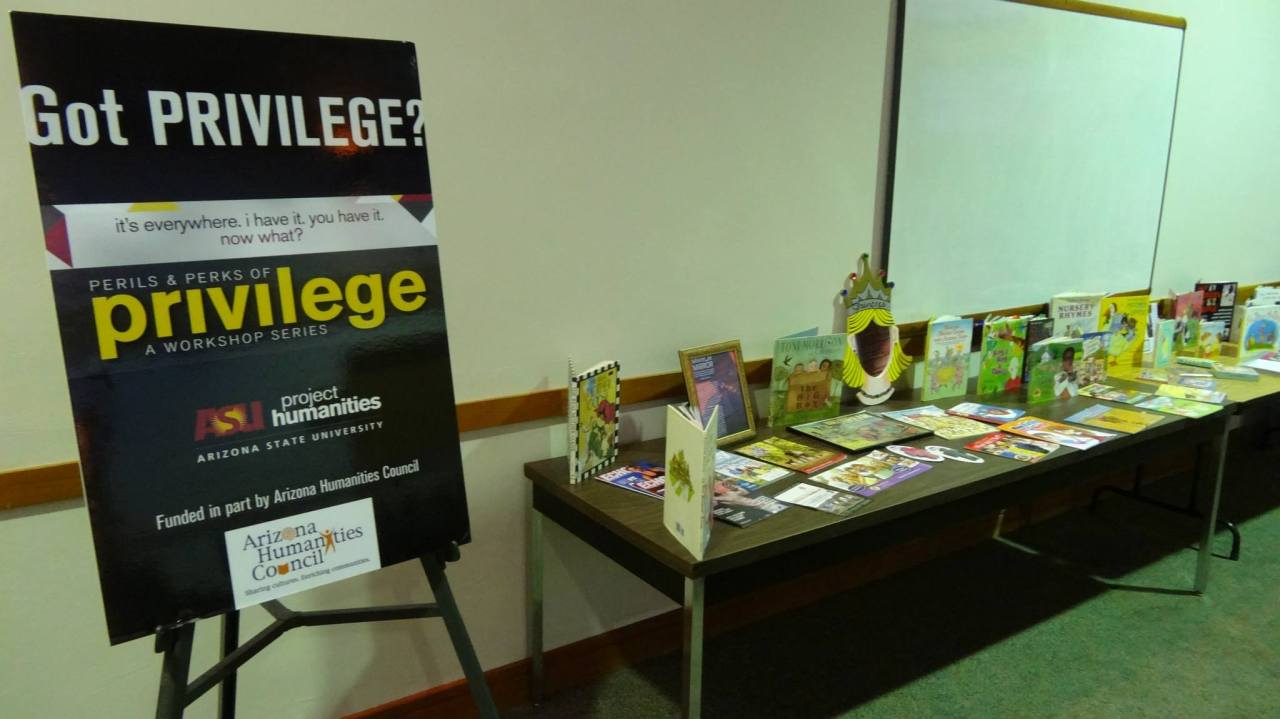
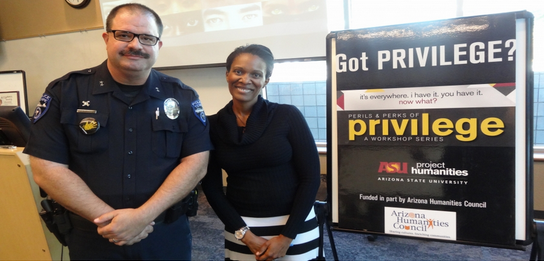
Privilege. I have it. You have it. Now what?
I've come to realize that I've drilled the importance of self-reflection into this blog, but not once have I described what self-reflection is, or what it looks like in the context of privilege. I'm going to try to fix that as best as I can.
Self-reflection, in layman's terms, is "meditation or serious thought about one's character, actions, and motives." It's taking a moment in your life to pause and critically contemplate the nature of your life, your self, and your actions. In a culture where we are all about self-validation, all about instant gratification, and life is constantly on the go, go, go, we have reached a destitute poverty of self-reflectors. Its gotten to a point where we don't even know what it looks like anymore. We don't even know where to begin.
Is self-reflecting self questioning?
Is it investigating? Excavating?
How long does it take?
Ten minutes?
Ten years?
I think the answer varies from person to person, but reflection in the context of privilege, in my opinion, is mostly based on observations that lead to an irreversible sort of awareness. It's an everlasting process. With different experiences, you become aware of different kinds of privilege. For example, I'd never really thought of able-bodied privilege until I started writing for this blog.
The real challenge comes when we start to deny the privilege that we have discovered, when we blow off multiple observations we've made as irrelevant to the conversation of unconscious bias.
A great example of the self-reflection process can be read in this article from the Huffington Post.
Gloria Atanmo exemplifies what it is to critically dissect observed disparities and sort them into privileges she has, many of which (such as African-American Privilege) she'd never consider a privilege previously .
Self-reflection varies on the person of course. What is reflection to me, to Atanmo, or her editor, could be entirely different from somebody else's "aha!" moment in privilege.
So what is self-reflection to you? Have you had any big "aha" moments worth that completely shifted your understanding of privilege?
Feel free to share in the comments below!
Sunday, August 30, 2015
And the Moonman for Best Hip Hop video goes to.. #VMAs http://t.co/SWRN5MPOOT
— MTV (@MTV) August 31, 2015
Nicki
Manaj's acceptance video has been a buzz all throughout social media
for the past few days. Her firm, assertive stance on white
artists winning awards by appropriating black artists' styles has
earned her a title as a revered voice of reason in the music
industry: a beacon of light. Manaj further inspired fans on stage at
the VMA's, where she called host Miley Cyrus out for her
tone-policing comments in a recent Time interview where
she claimed that Manaj was hurting her cause by not being
"polite."
As
awesome as it was, the speech was the end all to a greater issue. Not
to cultural appropriation, and especially not to tone-policing: an
issue that remains a huge threat to oppressed peoples outside of the
pop culture scope. However, as Maisha
Z. Johnson points out in a recent Everyday
Feminism article,
the whole ordeal does provide an important lesson to be learned, and
creates an ample opportunity to those blinded by their
bias to step forward and educate themselves.
Check out the article here.
Post
your thoughts in the comments below.
Sunday, July 19, 2015
It's easy to admit that privilege exists, but admitting it exists in ourselves is a whole other beast, and it seems like the more privilege you have, the less you actually get the concept of privilege. Personal accountability is a bullet dodged far too often, and according to a study released this past week by the Journal of Experimental Social Psychology, the reason why comes with a common misconception of what privilege actually looks like.
Accourding to a report by the Pacific Standard, during the study a group of 94 and 91 participants respectively were administered two different surveys: one covering racial inequality in America and the other childhood experiences. One group answered the survey straight away, while the other read a paragraph providing evidence of white privilege in multiple aspects of society. Researchers found that those who read the paragraph first were more likely to deny white privilege in their survey, but also more likely to claim harship in the other one.
They further predict that "...such evidence will be threatening and that people will claim hardships to manage this threat. These claims of hardship allow individuals to deny that they personally benefit from privilege, while still accepting that group-level inequity exists."
In other words, many fail to realize that a life with privilege is not a life without hardship, and just because one is oppressed in a single way, does not mean they do not benefit from privilege in any aspect at all. Tom Jacobs, author of the Pacific Standard article mentioned above, argues that we like to believe that in this country everything we gain is based off of our own merits, and when this idea is threatened, we feel offended, we feel like we're being told that we don't earn what we have. And yet, being accountable for one's personal privilege has nothing to do with denying their merits, but rather, admitting advantages. It takes a great degree of maturity to admit there is a difference between the two, but make no bones about it, a difference does exist.
Do you see individuals deny their privilege frequently? Do you agree with this study's explanation for this behavior? Express your thoughts below!
Sunday, July 5, 2015
We all know about white privilege, class privilege, even able-bodied privilege, but have you ever heard of something called neuro-typical privilege?
Up until this week, I hadn't. But then I came across this comic shared by Everyday Feminism.

This comic takes readers into a day in the life of a schizophrenic, and provides a simple list of need-to-knows and advice on socializing with those who have the mental illness. Not only was it informative, but it opens my eyes to a whole new kind of privilege that I've never noticed.
As the author, Crass, points out, dealing with the everyday challenges of your brain fighting against you isn't the only uphill battle that the mentally ill face. Because of the stigma media has branded to these people, primarily schizophrenics, many with mental illness have to pretend that there's nothing wrong with them in order to be accepted by their peers. This also shed light on a post I saw by a man with Agenesis of the Corpus Callosumon the blog Humans of New York who said:
I feel as if, from the outside, these assumptions seem so inhumane to cast upon people, yet we do it all the time. I dont know how many times I've tip-toed around people with mental illness just out of fear of not knowing what to do with them. But the reality is, these are people we're talking about, and it's heartbreaking to think that so many are trying to hide an illness because "coming out" as mentally ill brings so much isolation. You don't see that coming from cancer patients, or people who have physical (rather than mental) ailments. The true illness is not within these minds, but within our society. We have to reach a collective point of maturity to where we can strive to understand, embrace, and respect the mentally ill just like any other oppressed sub group of people.
However, in order to do that we must take the first crucial step first step in changing by being informed.
For more information on neuro-tyical privilege, take a look at this checklist here.
As well as this first account story on the harmful effects of neuro-typical privilege by a woman struggling with Autism.
And in case you missed it before, here's the full link to Crass's comic.
Up until this week, I hadn't. But then I came across this comic shared by Everyday Feminism.

This comic takes readers into a day in the life of a schizophrenic, and provides a simple list of need-to-knows and advice on socializing with those who have the mental illness. Not only was it informative, but it opens my eyes to a whole new kind of privilege that I've never noticed.
As the author, Crass, points out, dealing with the everyday challenges of your brain fighting against you isn't the only uphill battle that the mentally ill face. Because of the stigma media has branded to these people, primarily schizophrenics, many with mental illness have to pretend that there's nothing wrong with them in order to be accepted by their peers. This also shed light on a post I saw by a man with Agenesis of the Corpus Callosumon the blog Humans of New York who said:
“...when people know there is something wrong with your brain, they think you’re retarded...I’ve been labeled all my life. I’ve always been told that I’m learning disabled and I can’t do this and I’m not good enough to do that. And it’s hard to hear that stuff all the time without viewing yourself as a permanent victim and learning to be helpless. ...
Posted by Humans of New York on Thursday, July 2, 2015
I feel as if, from the outside, these assumptions seem so inhumane to cast upon people, yet we do it all the time. I dont know how many times I've tip-toed around people with mental illness just out of fear of not knowing what to do with them. But the reality is, these are people we're talking about, and it's heartbreaking to think that so many are trying to hide an illness because "coming out" as mentally ill brings so much isolation. You don't see that coming from cancer patients, or people who have physical (rather than mental) ailments. The true illness is not within these minds, but within our society. We have to reach a collective point of maturity to where we can strive to understand, embrace, and respect the mentally ill just like any other oppressed sub group of people.
However, in order to do that we must take the first crucial step first step in changing by being informed.
For more information on neuro-tyical privilege, take a look at this checklist here.
As well as this first account story on the harmful effects of neuro-typical privilege by a woman struggling with Autism.
And in case you missed it before, here's the full link to Crass's comic.
Sunday, June 21, 2015
It's no secret that women, particularly women in color, face the brunt of significant bias in their careers. But you'll be shocked to know the extent of it. According to a study by the Harvard Business Review, which included 557 surveys and 67 in-depth interviews from women in science, female scientists find that they constantly have to "prove" themselves to male co-workers. Prejudice fills these labs like a hot, sticky fog, causing women to struggle not only in maintaining respect, but preserving their passions.
According to this study, there are 5 types of Bias most women in STEM have in common.
1. Prove-It-Again:
People take Women's word for it when they insist that they are competent enough to do their jobs. Not only do they have to prove themselves over and over, but they often need more evidence to prove their points than male colleges.
2. The Gender-Role Tightrope:
Women can't act too feminine or they won't be respected, but at the same time, they can't be too masculine or they'll be considered "unlikable"
3. The Maternal Wall
Women are frequently questioned and expected to start families and, if they do, they are often pressured by co-workers to work less hours so that they can take care of their children.
4. Tug-of-War
While women generally support each other in the work place, others report that they feel as if they are competing for the "women's spot" in the workplace.
5. Isolation
This one is specific to women of color, who feel as if engaging with others socially takes away from their authority. In other cases, they find themselves being excluded from things because they think they'll be uncomfortable as the only minority in the group.
In addition to this, many women of color reported people being completely open and expectant to racial stereotypes, one black biologist reported being asked by an administrator if any of her family was "into drugs or in jail" while several Latinas claimed to overhear the stereotype of Hispanics being lazy. What's even worse, many of these minorities have reported to have been mistaken for janitorial or administrative staff.
This shows the sheer impact of bias. So many assume that making these assumptions is harmless, but the truth is, they hurt. And when people are faced with these comments and assumptions on a day-to-day basis, it goes from being a nuisance to a hostile workplace.Gender and Racial bias is driving women out of a field that we desperately need more people in. It's yet another reason why we must she'd our ignorance and put bias to an end.
Tuesday, June 9, 2015
Christian privilege is being able to practice your religion without any interference from society. This has been a long running issue for the Muslim community, however, it seems that one very small success has been made this past weekend. According to The Guardian the supreme court has overseen the case concerning Abercrombie and Fitch's firing of Muslim workers for wearing hijabs on the grounds of "breaking the dress code." The courts have ruled against Abercrombie in an 8-1 decision, under their the provision that her employer openly stated that she was not hired because of the religious accommodations the company would have to make for her, which is a direct violation of Title VII of the Civil Rights Act.
This is a victory not just for the Muslim community, but for our country as a whole. In an era of rampant Islamophobia in the United States, we need as many Muslim victories as we can possibly get. This supreme court case assures a single extra degree of equality for women in the workplace, and as small of a victory it is, I still feel that it is one to celebrate nonetheless.
See more information about the court case: here.
See more information about the court case: here.
Tuesday, June 2, 2015
A couple of weeks ago, I mused on the implications of Caitlyn Jenner's coming out as transgendered. At this point, it seems silly to not to do the same for her debut as a woman on Vanity Fair. Aside from a couple of ignorant tweets, Caitlyn's reception has overall been very supportive. Many are calling this transition a turning point for trans acceptance in society, however, that isn't entirely true.
The media coverage of Jenner's journey definitely has given the trans community its biggest spotlight in history, but "visibility is a double edged sword," says Kel Kray, Everyday Feminism contributor. In a society where "fitting in" is synonymous with "assimilation," it's important to watch bouts of awareness such as these with a weary eye, and to make use of them by clearing up some misconceptions while the iron is still hot. Kray's article "10 Things Trans Activists and Allies Need to Remember That Have Nothing to Do With Caitlyn Jenner" attempts to do exactly this.
Definitely worth a read. Check it out here.
Sunday, May 24, 2015

It's often argued that success isn't about who you are, but how hard you work. While those coming from financially sound families do have an upper-leg, the less fortunate ones have the opportunity to reach this same level through hard work and a good education. After all, we aren't solely defined by our home life, and the differences it allows to our character is relatively small. The problem is, as this comic argues, "...over the years all these little differences, they start to add up, to build into something bigger."
"On a Plate" accurately and profoundly expresses the implications of privilege. Closing these disparities isn't a matter of socialism, it's a matter of rectifying the fact that "equal opportunity" doesn't exist in this society.
Check out the whole comic here.
Monday, May 4, 2015
Privilege isn't usually isolated, many times, certain kinds of privilege are connected to others. White privilege, for example, connects to class privilege in many cases.This article breaks down information from the US Census Bureau and provides six easy-to-understand charts that illustrate six different building blocks in the bridge between white and class privilege.


See the full story on Upworthy.com
Sunday, April 12, 2015
Those who don't identify with a defined gender often have trouble finding a comfortable, judgement free place to use the restroom. It's a plight no cisgendered person has ever experienced, but it seems, for the most part, that when people cant specifically catagorize a bathroom patron's gender, tery generally tend to treat them with animosity. When bathrooms are inclusive too all genders, the boy-girl rules don't matter, and the pressure comes off.
For many of us, this isn't considered to be "big news," but it should be, because it speaks volumes about the progress that is being made in the LGBTQ movement. The white house's choice to add gender inclusive bathrooms to their blueprints is a symbolic leap taken by the Obama Administration in the name of protecting LGBTQ rights, and best of all, it's a permanent symbol that will remain in the white house even after President Obama leaves office.
Way to go, guys!
Sunday, April 5, 2015

This weekend everyone on my Facebook feed seemed to be up in arms over Jaden Smith wearing a dress to coachella. I don't really understand the cause of the hype. First of all, it looks more like an over sized T-shirt than a dress, and second, even if it was a dress, who cares?
Men always seem to be dressed in women's clothing under an absurdest context, but does it always have to be absurd? After all, society allows women to cross-dress with no problem. In the words of Mark Blechner, Author of Sex Changes: Transformations in Society and Psychoanalysis " Marlene Dietrich in a tuxedo was considered very erotic; Jack Lemmon in a dress was considered ridiculous." Similar reactions to cross dressing celebrities have been gauged throughout the years, but why? Why is there such backlash? Why do we have a reaction to it all?
NYU released an analysis of this issue in 2009, suggesting that it's all a symptom of a cultural stronghold of heteronormativity.
Heteronormativity is defined as the social norm that suggests that people fall into distinct, complimentary genders. However, when people challenge the behaviors assigned to their sex, their gender roles, this in turn challenges a prevailing societal norm. When a celebrity breaks social norms there is often a widespread, out of proportion response. That's why the internet practically blew up when Jennifer Lawrence cut her hair or Jaden Smith is seen in a not-so-masculine outfit. Our society conditions us to care more about it than it really matters.
But the reality is, people aren't solid blocks of gender. Females have masculine qualities, and males have feminine qualities. People cross the (imaginary) line of boy-girl rules on a day to day basis, and nothing bad has happened as a result of it. The negative repercussions start when the judgement comes in. It starts when hate is used to emphasize little differences in each other.
The concept of violating gender roles is the same as violating racial roles, or class roles. These designations do not exist, and we should not allow others to think so by consonantly reacting to the things that do not adhere to our norms.
Subscribe to:
Posts (Atom)